Showing posts with label teaching. Show all posts

Saturday, December 4, 2010

The Value of Instruction

Kia ora tātou – Hello EveryoneThe Value of Instruction
“A long time ago, in Newsday for November 15, 1994, Billy Tashman said with reference to a large, government-sponsored field test of different instructional approaches: ‘The good news is that after 26 years, nearly a billion dollars, and mountains of data, we now know which are the most effective instructional tools. The bad news is that the education world couldn’t care less.’
The same holds true today." James Kauffman

When I first began teaching, I bristled with the desire to instruct, inspire, coach, and enlighten. I’d just been through Moray House College of Education, Edinburgh, where my tutors and mentors truly recognised the worth of excellent instruction.

Yet for the past 30 years and more, I have felt like a disillusioned school teacher who is old fashioned, out of date and not really understanding what’s happening in education.


The other day, a good friend and colleague passed on to me a recent article from Teachers College Record, by James Kauffman. It was written as an introduction to his recently published book,

The Tragicomedy of Public Education:
Laughing and Crying Thinking and Fixing
.

As I read through Kauffman's article, I recalled how I felt when I read Shelley Gare’s book,

The Triumph of the Airheads and the Retreat from Common Sense.

I experienced déjà vu at every page.

James Kauffman is Professor Emeritus of Education at the University of Virginia in Charlottesville.

In his review article, entitled Reforming Public Education: A Tragicomedy, he explains how some people, working within education, fail to recognise the most important factor in improving learning:

“Truly ridiculous statements about reforming schools have been made by generally intelligent people who happen to botch thinking about education. Too often, their silly statements are taken seriously, making matters worse. Some would-be reformers ignore what produces most learning — instruction.”

Kauffman draws attention to all the areas of stupidity in education that I’ve complained about, for decades . . .

. . . about improving teaching:

“They might say we need better teachers without defining “better.” People aren’t necessarily better teachers because they’re smarter, know their subject better, or have taken more courses. We need standardized tests, but good teaching isn’t easily measured as “value added.” “Better teacher” doesn’t necessarily mean “higher average pupil gain score.” Good instruction is defined by what a teacher does.”

. . . about pursuing change without recognising what needs to change:

“On January 2, 2010, Kevin Huffman published in The Washington Post his heartfelt opinions about how to reform education, including suggestions that we recruit talented teachers and fire bad ones, base policies on student achievement, and get parents to demand what’s best for their children. He quotes a U.S. Senator from Colorado, who says that the education system must change, but he doesn’t say how. Any change will do? Sorry, Kevin and Senator, with all due respect, we don’t need just any kind of change. Unless it’s the right change, we’ll get nowhere.”

. . . about the
misunderstanding and misuse of statistics:

“One reason the “thinking” of so many earnest reformers is tragicomic when it’s taken seriously is that you can’t have all of the children (or teachers or any other group we measure) reaching any percentile higher than the first group any more than you can have all of the children (or teachers) above average.”

. . . about setting education goals that are absurdly unachievable:

“No Child Left Behind (. . .) set the goal of universal proficiency of students by 2014. That goal is a will-o’-the-wisp that anyone else who understands the most basic mathematical-statistical realities knows is impossible.”

. . . about teaching methods inappropriately applied to all learners:

“Direct, systematic instruction is more effective than other approaches like “discovery learning” (essentially, letting kids find out for themselves) and a lot of the other popular but failed ideas about teaching. Go to www.adihome.org/ to find out more.”

. . . about using test scores to judge success.

Kauffman lists his criteria for judging success:

  1. effective instruction,
  2. students’ engagement in productive activity,
  3. homogeneous grouping for instruction,
  4. positive emotional climate,
  5. clear school-wide expectations,
  6. positive support for desired behaviour,
  7. involvement of parents and communities.

Check out:

http://www.youtube.com/watch?v=GpAFlbncygM

The Tragicomedy of Public Education: Laughing and Crying Thinking and Fixing,
James M Kauffman, FULL Court Press, 2010
– ISBN 1-57861-682-4

The Tragicomedy of Public Education – DESK COPY


Ngā mihi nui – Best wishes

Tuesday, October 12, 2010

AADES LEADERS' FORUM 2010

AUSTRALASIAN ASSOCIATION OF DISTANCE EDUCATION SCHOOLS
29 September - 1 October

Venues: Te Kura (Day 1) and Te Papa Museum of New Zealand (Days 2 and 3)
Wellington, New Zealand


SUMMARY:

I was privileged to attend the AADES Leaders' Forum 2010.

This was a well attended three day event, with speakers from New Zealand and afar. While I attended all three days of the Forum,
I did not attend every session and there were some that were held concurrently. However, I report on all the keynote speeches here.


This was essentially a listeners’ event, though there was a little opportunity for participation from the floor.

Day One consisted of a late afternoon powhiri held at Te Kura.

Marcus Akuhata-Brown was the facilitator for Days Two and Three of the Forum, at
Museum of New Zealand Te Papa Tongarewa. His humility, balanced approach and sense of humour were evident in the elegant way he conducted the programme.

A feature of the Forum was the Māori music and harmony. Each guest speaker was thanked in a traditional way by music and song, a true mark of respect. It is a credit to Mike Hollings that he joined in with every one of those musical occasions (I’m sure he engineered them all) most times accompanying on his guitar. This part was altogether a most memorable, entertaining and cultural contribution to the atmosphere of the Forum.


DAY ONE

The Forum began mid-afternoon with the gathering of staff, contributors and visitors and a powhiri in Kauri room, Te Kura, followed by congenial time for refreshment.

Then followed brief welcoming addresses from Mike Hollings, Trish McKelvey and the Chair of ADDES, Bronwyn Stubbs, as well as short speeches from Karen Sewell and Janelle Cameron.

Karen Sewell


Karen spoke of the future that lay in the education of children. She spoke of the trauma that children suffered during and after the recent Christchurch earthquake, and how Te Kura had stepped in extremely quickly to provide support with this.

She talked of the complex and uncertain future that children will follow. Education must transform, not reform ‘the system’ in order to permit children to navigate intricate pathways. Teachers have a part to play in changing our children’s future.

Janelle Cameron

Janelle spoke of the digital divide – how she was still grappling with the technologies – how the digital age seems to overwhelm many people of her age.

Her metaphor for the happenings in learning today was like “a train going through (a station) and not stopping”.

She referred to the Internet and its use as a teaching tool and to what she called “Bloom’s Pedagogy”, the new “Digital Taxonomy” and their part in teaching today.


Day One closed with drinks and nibbles and a chance to network.


DAY TWO

Hekia Parata


Hekia gave us a National Party view of where teachers are at in 2010. She spoke of them focussing “on teaching rather than learning”
(I think she was referring to their learning rather than the learning of their students). Hekia explained that teachers do not seem to learn from learning, and referenced this to education research.


She referred to the mind/brain as the most important part of the being. Yet kids, all over the world, are still sitting in classrooms being taught by a single teacher using traditional teaching methods.

Hekia specially referred to the 1 in 5 students that were clearly being failed by the system – that schools focussed on crowd control rather than on learning.


Hekia’s description of Ruatoria formed a large part of the manifesto-like speech she delivered. She spoke of her family/ brothers, sisters/ community and what they did when she was a child.

Hekia spoke of the demography of New Zealand and of how many children were uninspired at school.

She spoke of the money New Zealand borrows every year to spend on education and the community. Hekia referred to the 1 in 5 ratio and that for many, the model is not working. Her concern was mainly about what she called “brown students”, and referred to their place in the diverse population that is evolving in New Zealand.


She spoke of professionalism that customises skills to give a service, and that such a service was needed by the 1 in 5 children in New Zealand: those that needed to find a job, for instance – a sector that “deserved all the attention teachers can give”.

Hekia summarised her speech by referring to the triangle of Identity, Community and Education: three important areas that provide the basis for learning in an individual.


Liz McKinley

Liz examined some of the statistics on Māori success in education from the Starpath project, University of Auckland. Her quote from Niels Bohr, “Nothing exists until it is measured”, summarised her approach.

She also examined some recent government statistics of Level 2 NCEA results, from 2003 to 2008, comparing Māori with non-Māori. Only 40% of Māori learners get to year 13. Less than half of these go on to study at tertiary level. She showed graphs indicating that in percentage achievement and in success rate, Māori learners were substantially behind learners from other ethnic groups.

Liz analysed these results in a number of ways: that 32% of Māori learners in a year 13 group will eventually go on to further study – that 18% of those will have achieved university entrance qualification – that 6% will actually enter university – that 2% will finish the courses with a degree – that 0.4% will go on to doctorate study.

She explained that Starpath, led by The University of Auckland in partnership with the New Zealand Government, is a research project (now in its 6th year) that focuses on the educational outcomes of New Zealand learners who under-achieve at secondary school. Starpath utilises:

  • research teams,

  • 5 high schools,

  • 1 university and 1 technical institute.

Liz spoke of the need for evidential material that schools require in order to make informed decisions – that schools were not getting help with bringing all available useful data/ideas/strategies together and with aligning these so that they could be used to improve learner outcomes.

She explained that schools do collect data on student learning and achievement, but the data is not centrally stored. She asserted that schools do not feel that ownership of this data is important. She stressed that there was a real need for concerted strategies so schools could usefully collate data related to student achievement and use this to accomplish an improvement in learner achievement.

Liz spoke of the Academic Counselling and the Target Setting (ACTS) programme and how they improved final year NCEA completions. The biggest gains were made by Māori and Pasifika students, with 16% more Māori students and 20% more Pasifika students achieving important learning in NCEA Level 1 Numeracy and Literacy.

Liz concluded by warning that gains for Māori learners were lessening - that many schools had a plethora of programmes, 84 in some, based on teacher interest rather than what could benefit the learner. She appealed that this was actually a moral issue that needed attention, by all parties including teachers in order that it be addressed effectively.

Bentham Ohia

Bentham, CEO of Te Wānanga o Aotearoa, gave an overview of the Open Wānanga – a “Māori Higher Learning Tertiary Institution” of 37,000 learners – 40% of those do not have a secondary education.

He put a number of questions:

  1. What counts as knowledge? What knowledge counts? Who decides?
  2. What counts as success? What success counts? Who decides?
  3. What counts as assessment? What assessment counts? Who decides?”

Te Wānanga o Aotearoa is unique:


  • kaupapa wānanga
  • unique programme-offering delivery
  • home based kaitiaki (guardian) supported
  • monthly cohort enrolments
  • centralised support
  • minimised restrictions.

Viv White

Viv spoke briefly of Big Picture Education Australia (BPEA). She then looked at some learner statistics and other related learner information:

  • 14% learners not learning or earning – 50% in some places
  • 20% fail to complete year 12 – 50% in some places
  • complex social background
  • distance education is not immune to the same problems that exist in F2F systems.

She stressed how serious these facts were and that a new model was called for. Viv then put the question that I had asked her at TCS Forum in May this year(!) – basically:

“Can we create a Big Picture Distance Education model?”

Viv then returned to the Big Picture model:

  • 1 learner at a time (which is how Te Kura works)
  • small by design
  • advisory 1 – 15 | 1- 17 |
  • Learning Training Internship.

Learners could achieve improved outcomes: engagement – graduation – tertiary learning. She spoke of beginning with network connections – developing a community of practice and commitment to collaborate – building a system of influence: not with critical mass but with critical connections (BPEA and Te Kura).

Jen McCutcheon

Jen defined authentic learning in the context of Te Kura, explained the process and outlined some of the approach used – one that focussed on the learner in context. She spoke of how it relies on rich conversation between the Learning Advisor, the learner and whanau.

Jen explained how finding the centre of what interests and impassions a learner was an all important part of that process. It’s then that a start can be made on building relevant programmes around the learner and nurture these with frequent ongoing discussions.


Jen went on to define what constituted a ‘rich conversation’: goal setting – identifying ‘aspirational’ goals – career exploration – interviews and talking with people – job-shadowing – resetting goals. She mentioned the part that Gateway, Star and other programmes can play in the development of this process.

She described the ‘tail of underachievement’ and mentioned the consequential 25% of people aged 15 to 19 years who are unemployed.

Westley Field

Westley is Director of Online Learning, Skoolaborate. He began his delivery by demonstrating an online delivery/facilitation by an avatar in Second Life (SL). Westley then Skyped his friend, Chris, who was the person behind the SL avatar.

Westley spoke briefly of the developments in online learning at MLC School. He spoke of how technology makes the routes to achievement more facile, and not just in learning but also in creating commercially useful objects, such as the Doritos commercial he showed us and that was made for $150 by a teenager using readily available equipment.

He encouraged that we should “try things new” – to “move forward with real action”. He spoke about personalised (online) learning. He spoke of how to get the attention of learners if they have computers in their hands. He spoke of how “knowledge”, and how to use it, takes on a new meaning with the developments in technology, Google and the Internet.

Westley talked about giving people experience in the use of technology – in particular giving young learners safe, ‘unblocked’ experience in technology use. He spoke of the technologies that can change learning, including the development of the e-book such as the Amazon Kindle.

He referred to the improved success by learners using online learning productively with other learning methods compared to those learners who are in the classroom without such technology.


Sandy Dougherty & Nathaniel Louwrens

Sandy and Nathaniel gave a presentation on their experiences in trialling Active Worlds. The study was to evaluate Active Worlds as a learning technology and also its suitability in a distance education setting.

They demonstrated a treasure hunt that had been built in the 3D environment of Active Worlds. Some of what they reported was about their own initial experiences in the 3D environment – some of the seeming ‘chaos’ perceived by people who are new to this technology – which later developed to a successful resolution.


Their intended focus was to be on working with learners collaboratively and how to get learners to work together. The reality was slightly different.

Sandy and Nathaniel found that young learners (years 7 to 10) learnt the technology skills for themselves very quickly, skills that the teachers had taken 2 terms to learn. They also reported that the learners preferred online (txt) chat rather than using the voice chat, though they were comfortable with the teacher using voice chat in instruction.

Sandy was careful to get useful (and fascinating) feedback from her learning group, to which she put a number of questions. Asked how they learnt, Sandy’s students gave a number of interesting answers, among which were ‘playing’ and ‘practicing’.

Asked if they needed a teacher there was met with a resounding, “YES”. The children preferred the teacher speaking to them rather than using the chat box. The common feeling expressed by learners was that the whole learning experience was “awesome!”


About the technology . . . learners felt that though it was a bit clunky, it was like playing a game that was really school. Navigation in commercial games technologies tend to be far more facile in comparison and the 3D renditions are often superior to what they experienced in Active Worlds.


DAY THREE

Mike Hollings – Walking in Two Worlds

Mike spoke of the money poured into education and the efforts that are not actually achieving learning. He cited Cisco’s The Learning Society and stressed that the cost of education should be tax-efficient.

A successful education system has to be based on the principle that it is for everyone and must embrace ones personal culture while at the same time supporting innovation. He stressed that there was a need for a huge change in present systems. He cited Phillippe de Woot’s need for societal educational metamorphosis and referred, once again, to Allen Curnow’s Landfall into Unknown Seas:

“Simply by sailing in a new direction
You could enlarge the world.”

Mike spoke of leadership today and the huge diversity of theories that are based largely on western ideas. He asked of leadership, “what could we learn from other wisdom?”

He drew attention to how Māori people spend a lot of time ‘going back’ to their cultural places, communities and the related pursuits. The educational system in New Zealand does not acknowledge this cultural aspect as much as it does that of western cultures in activities such as music, opera, and dance.

Mike gave an overview of some of the wisdom from Māori leadership, and how it focussed on the needs of people and the resources they needed – the understanding of communities and their tribal/cultural boundaries. Māori leadership qualities are not necessarily accepted or respected in the wider community in New Zealand. Mike listed some of the elements of that leadership:

Manākitanga – hospitality
Rangitiratanga – weaving people together
Whanaungatanga – interdependence
Wairuatanga – spirituality
Kaitiakitanga – guardianship
Whakapapa – genealogical connections
Te Reo Rangatira – Māori language

Mike observed that community intellect is at risk when languages are lost. He also spoke of the worth of trust and the value of openness – that for trust to exist, intentions must be clearly understood and patently visible.

Mike summarised the thrust of his speech by saying “we cannot (always) rely on western systems”. He referred to the importance of locality in determining who we are and where we are at in New Zealand. He used lines from the poem Lost, by David Wagoner, to illustrate this:

Lost

Stand still. The trees ahead and bushes beside you
Are not lost. Wherever you are is called Here,
And you must treat it as a powerful stranger,
Must ask permission to know it and be known.
The forest breathes. Listen. It answers,
I have made this place around you,
If you leave it you may come back again, saying Here.
No two trees are the same to Raven.
No two branches are the same to Wren.
If what a tree or a bush does is lost on you,
You are surely lost. Stand still. The forest knows
Where you are. You must let it find you.

Jen McCutcheon and Viv White

This was a panel session introduced by Marcus Brown where Jen and Viv spoke freely of their vision of the Big Picture.

Jen gave a brief summary of the Big Picture process including some of the best practice used. There then followed a brief session of questions from Marcus and from the floor. Jen and Viv both spoke to the questions that were asked.

Brenda Frisk

Brenda summarised her vision of what she called “visual knowledge” and its place in 2010. She spoke of the need to reduce the barriers that may exist between people and their use of available technology, and also of the need that industry has to learn to manage technology. She posited that teenagers lose trust and respect for people in industry when they see that they do not have skills to use the technology effectively.

Brenda spoke of tacit knowledge, implicit knowledge and cultural knowledge and their use to the people employed in a company. She emphasised the need to have online portals for children to access at any time of the day.

She spoke of the frustrations that an organisation has in finding and in accessing data with technology and that there was a need to have technology built for people, not just for the technologists to use. Its property and function need to be relevant, evidential, contextual, credible and collaborative.

Brenda spoke of two important reports, the Horizon Report and Learning Powered by Technology, and summarised some of the key elements brought out in these. She then spoke further on visual knowledge and explained and demonstrated how 3D (stereoscopic) visualisation could give a better perspective in viewing machines and other structures in context.

Hine Waitere

Hine introduced herself from her tribal background, then spoke of ako, a pedagogical concept that encompasses both teaching and learning as parts of the same process. She illustrated how ako had been brought out in the Forum with reference to those presenters who had told of their experiences in learning (and teaching) during their presentations, and the stories they told.

She spoke of Māori carvings and tukutuku and how these also have stories to tell. They are different forms of literacies. Hine spoke of her appreciation of landscape but also recognised that there was much there she did not understand.


Hine read the story, Butterflies, by Patricia Grace, depicting ‘difference’ without a need for that difference to be fixed. She went to the heart of this idea by referring to how the grandfather did not correct the teacher, but simply explained where she was at.

She also illustrated how teachers have power and authority to direct ‘values’. She asked,

“What are the values that lie at the core of our (teaching) practice?”

She then talked about the tail of young learners who struggle with their ‘education’, listing the 5 Ds:

Deficit
Deprivation
Disadvantage
Difference
Diversity.

Tuesday, September 14, 2010

Learning, Literacy and Learner Skill

Tēnā Koutou Katoa - Greetings To You All
Wordle Array
This year, the New Zealand Ministry of Education displayed a list of terms in a draft instruction sheet for learners of Chemistry.

The proposal is that page 3, labelled for student use, may assist learners to reach the standard and achieve a rudimentary qualification in secondary education (NCEA Level 1).

Learners at this level must have a “comprehensive understanding” of aspects of basic Science. Here’s a sentence from the draft sheet:

A comprehensive understanding means you are able to link ideas to integrate the relevant chemistry through elaborating, justifying, relating, evaluating, comparing and contrasting, or analysing.

The new Bloom’s Taxonomy, a tool for teachers, lists the same and similar terms as in the sentence shown above. It is understood, however, that teachers using Bloom’s taxonomy are either familiar with the meanings of the terms or have the initiative and required education to find out about these for themselves.

Terms like justifying and evaluating are not easy to define clearly, even for some teachers. Most teachers do not draw a clear distinction between the processing skills of contrasting and comparing, say.

Yet these are just a few of the difficult terms that are found in a draft instruction to NCEA Level 1 learners.

As teachers, of course, we must teach/coach/train our learners to be able to recognise the difference between such terms as contrasting and comparing. The learner needs to be introduced to what each of these analysis processes has to offer.

Why do we end up asking kids to get their head round the lingo that teachers may well have difficulty grappling with? I wonder if this intellectuality is really beyond the stage that most NCEA Level 1 learners are at, given that many already have difficulty with literacy at this level.

It seems that responsibility for learning continues to devolve.

It is as if learners are now expected to know the meaning of terms (or at least acknowledge their existence) often before they have the chance to get any real practice in the skills they are the labels for. These are skills that learners may not yet have the developmental ability to permit them to understand.

Ka Kite Anō - Catch ya later

Monday, May 10, 2010

Journey

Tēnā koutou katoa - Greetings to you all
Johnstone's Information Processing Model
As teacher, I often tramp the journey. Most of the way, I learn more than I teach, which is fortunate as I’m bored easily.

Even the well trodden-paths bear fruit. But I have to be more aware when pacing there; vigilant, else I miss what is to be learnt.

As teacher, most of what I learn on the well-tramped lanes happens as I watch others less familiar with the paths. This learning is the most enlightening, yet so difficult to pass on to others.

I’ve begun to understand why.

As teacher, all learning is a journey. How can a learner explain the destinations to someone who has never been there and seen what they’re like? There is often no measure to compare, no gradation to gauge against, and no foundation to build upon.

And so learning, once accumulated, is not necessarily always useful. At least, not as useful as we might think it should be. And so it is that the adage of teachers ‘filling jugs’ doesn’t really work, no more than their teaching does.

Johnstone’s Information Processing Model, a simplified version which heads this post, suggests that there is a real need to tread the ways often. It implies that learners may not be wholly aware of what’s to be learnt on the way, nor of its significance even if they were.

It also reinforces that perhaps filling jugs doesn’t work so smoothly, that much is spilt in the process – that many approaches may have to be tried before the jugs contain anything useful at all.

Ka kite anō - Catchya later

Friday, May 7, 2010

The Tale Shouldn't Wag The Dog

Kia ora tātou – Hello Ever
Funtime Comic article
I finished writing a print-based learning resource a few weeks ago. I say finished – it was really only a draft before I passed it on to the editors.

I put a copy of it on the Science database and was grateful for feedback received from our now huge Science teaching cohort. It was good to get comment from colleagues who, like me, had been plunged into the sweat of writing learning resources to deadlines.

Storyline an interest

Among many aspects of the draft discussed was its storyline. This attracted interest from my colleagues as it was seen as an effective teaching feature. It also made me think more deeply about strategies I’d used in creating the storyline in the first place. I realised that I hadn’t really planned it.

It became clear with more thought and discussion that a storyline in a learning resource should not be a starting point for writing. My past experience has shown me that building necessary learning around a plot can be difficult. It’s a manufactured process that has the potential to limit severely pathways the writing may follow.

A different approach

Adhering to a storyline can stymie other useful teaching ideas that may otherwise emerge. It can lead to contrived resource components that do not satisfactorily contribute to effective learning.

The storyline that seemed to work so well in this resource was created using an entirely different approach. Here’s how it came together for a NCEA Level 1 generic learning resource on writing a scientific report.

Staid and boring stuff

I started on the second chapter simply because it was the one I had in mind when I put my fingers to the keypad. My plan was for Peter to write a report of something he did during his holidays and hand it in for his Science teacher to assess at the start of term.

I had practically finished that chapter when I'd already decided that it was boring, principally because it involved doing homework for a teacher. Undaunted, I continued with chapter 3, then drafted chapter 1 and was half way through chapter 4 when I really couldn’t pursue my ideas any more. The resource was becoming all too staid and boring.

Change tactics

I went back to chapter 2, stripped it down and rewrote it introducing a friend, Mahi, an intelligent M
āori girl who could write good scientific reports.

It was she, not the teacher, who read Peter’s brief report of his visit to a museum exhibition on colossal squid. It was she, not the teacher, who desperately wanted to see the exhibition after reading Peter’s report.

And it was she who tried to follow the deficient instructions in the report. As a result of these shortcomings, Mahi missed out on her planned visit to the exhibition – all good material to use for teaching about informative report writing.

I switched back to rewrite parts of chapter 1, simply introducing the characters Peter and Mahi. I then flicked to the other draft chapters incorporating the growing relationship between Peter and Mahi as friends who supported each other with their interest in Science.

Here’s how chapter 1 begins:


Reading magazines

Peter found a magazine page that had an article about a car that ran on water instead of petrol.


Activity 1A

Read Peter’s magazine page shown below.


1 What is the name of the magazine that this page came from?
__________________________________________________________________

2 Explain two things you see on the magazine page that might suggest that the information about the car is not true.
__________________________________________________________________

__________________________________________________________________

__________________________________________________________________


Peter wanted to find out more about the car, so he went to a car showroom and spoke with a salesman. The salesman laughed at Peter and did not believe that a car like that could be made. Peter still wasn’t sure if the information in the magazine was true.


3 Explain two other things Peter might do to find out if the story in the magazine is true.

__________________________________________________________________

__________________________________________________________________

__________________________________________________________________

__________________________________________________________________
Check the answer guide


Proof of the pudding

The rest of the resource fell into place using the theme of collaborative learning between two school chums. Peter followed up Mahi’s library research into giant squids and colossal squids. He then asked her for help when drawing a graph for the report he was writing.

Instead of Peter handing in his report for a teacher to mark, he chose Mahi to help him improve it. This permitted a chummy dialogue between two friends that was not only fitting and appropriate, but had the potential to enhance learner interest.

All this was laid over a framework of teaching and learning. I got a real kick out of how easy it was to incorporate a story line in a learning resource, and from the supportive feedback I received from colleagues.

The proof of the pudding will be when I examine feedback from learners!

Ngā mihi nui – Best wishes

Thursday, April 29, 2010

What Are Teachers For?

Tēnā koutou katoa - Greetings to you all
What Are Teachers For
I have heard it said that teachers are assessors and that assessment is part of the teaching and learning process. I often wonder if the meaning of the word ‘assessment’ is sometimes stretched and perhaps misused in contexts to do with learning.

Standard assessment

At the moment, NCEA standards are of two types. There are Unit Standards, awarded to learners who meet all component criteria for a particular standard. There are also Achievement Standards, awarded as Achieved (just a pass), Merit and Excellence.

Re-assessment

A learner, who does not meet the criteria for a unit standard or for an award in an achievement standard, can choose to be re-assessed after a period of re-teaching and further study.

My thinking has never been aligned with the philosophy of teaching to a standard. I don’t believe that’s what ‘education’ is about. However, as a teacher, I have no choice but to accept the assessment system that is now intimately bound with secondary education in New Zealand.

At least re-assessment permits the learner to revisit the learning and allows the teacher to do some more teaching.

Re-submission

NZQA is reviewing, again, the process of assessing learners for NCEA standards in New Zealand. The specific issue that I bring to this post is the matter of what’s called a re-submission. I’ll explain.

When a learner completes and submits a standard assessment test, and it is not clear to the assessor whether the learner has actually met the standard, the test script can be returned to the learner for amendments to be made. These are performed by the learner under test conditions before re-submitting the test script for the assessment to proceed. This process is called re-submission.

Furthermore, during re-submission the learner is not permitted to study on the topic, nor receive any teaching, coaching or advice associated with the standard, before revisiting assessment tasks they performed in the test script. They are only permitted to consider their answers and perhaps amend them.

There have been many debates by teachers about what constitutes a case for re-submission. Performing a re-submission is quite different from entering into a phase of re-teaching followed by re-assessment. Teachers like things to be cut and dry. So many discussions at the moment centre on the criteria for re-submission.

A disservice to learning

As a teacher who is more interested in what learners learn and how they learn, than what they achieve in a standard test, I am often in a bind over the issue of re-submission.

I feel that I’m doing learning a disservice if I do not permit (and cannot permit) learners to revisit the learning. This is precisely what happens, and must happen according to the rules for standard assessment, when re-submissions are permitted for learners who are very close to meeting criteria for a particular standard.

In such instances, I start wondering what my role is as a teacher and educator. I also wonder if I am doing learners a disservice by permitting them to re-submit their test evidence without any further teaching and learning taking place.

I feel that if learners are in need of more teaching and learning, then they should be given the opportunity to receive just that. This opportunity is denied learners who gain a standard on re-submission.


What are teachers for?

Ka kite anō - Catchya later

Tuesday, March 9, 2010

Authentic Elearning?

Tēnā koutou katoa – Greetings to you all
Sculpted Earth by Magnuz of Sweden - Badger
When a learner is in an environment that is relevant to what's being learnt, the likelihood for effective engagement is high. Learning by doing is supposed to be one of the most successful ways to learn.

Both these factors – the relevant environment and the doing – are thought to provide jointly the greatest incentive for a learner to take interest in what is to be learnt. They form the basis for what is referred to as authentic learning.

For as difficult as such situations are to establish and sustain in face-to-face situations, elearning environments can present major barriers to authentic learning that are almost impossible to overcome unless the elearning vehicles are in situ.

Typical examples of these are online tutors for word processing, graphics applications or other computer functions where the learner is involved in using mouse and keyboard to operate a tutorial directly relevant to the application.

I cite the Southern Hemisphere planisphere with a built-in tutorial as one example of an in situ learning vehicle in a junior Science elearning resource.

The examples given above are all very well, but unless a considerable component of what is learnt is transferable to other purposes, the learning acquired by the learner has limited use elsewhere. One of the characteristics of authentic learning is the transferability of the learning to other situations or disciplines.

Two examples where generic and transferable skills can be learnt are online instruction in touch-typing, and the use of a flight simulator as part of training to become an aircraft pilot.

Kallan and Tuxedo presenting a session in building in SL

Recently I was privileged to share in the facilitation of a session sponsored by ISTE, teaching people online to manipulate and assemble prims, the building blocks of Second Life (SL).

As well, part of the duties I perform as an ISTE docent in SL involves assisting and teaching newcomers to that environment by the use of text and voice chat. The learning facilitated in these situations is authentic.

People who come into SL need to acquire new skills. Most who stay to use that environment want to learn skills that can only be acquired online. But other than exercising skills in associated disciplines such as art and design, the skills I teach to newcomers are only useful in Second Life. And here is the conundrum associated with authentic elearning.

Apart from learning that is directly associated with the elearning application or platform, how is authentic learning achieved online?


Ka kite anō – Catch ya later

Wednesday, February 17, 2010

Using Elearning Resources and All That Gear

Tēnā koutou katoa – Greetings to you all

This week I submitted my plans for three Science learning resources that I will be writing this year. The expectation is that the drafts will have an online component.

I say drafts, for when the resources are built and accessible to the learner, the intention is to amend and refine them, as part of an ongoing process, dependent on analysed feedback from the learner.

Each resource set will provide teaching and learning material for a learner to achieve an associated NCEA Level 1 Science standard.

There will be no formal question-and-answer written tests for these.
All of them include reporting of a sort – a way that learners can show their communication skills – as well as demonstrating their knowledge and understanding of the various aspects of Level 1 Science.

Learning and assessment

I was heartened by Britt Watwood’s response to my last post on elearning and pedagogy.

He kindly included a link to the Virginia Commonwealth University Online Teaching and Learning Resources Guide, which I read. It was a joy to see the inclusion of the terms formative assessment and summative assessment, with appropriate links given so that their use is unequivocal.

Summative assessment will take the form of teacher assessment, driven according to assessment schemes written against the NCEA Level 1 Science standards. But the formative assessment that has to occur before that will consist of an assortment of methods including:

  • self-marked booklet study
  • computer assessed interactive activities
  • teacher feedback
  • creating and maintaining learner engagement.

For those who are unfamiliar with the term, formative assessment is a means used by a learner to reflect on what’s been learnt and understood. A course of action may be followed to do further learning if required.

Formative assessment can involve a teacher who provides feedback to the learner. It takes the form of automatic computer feedback in interactive elearning resources. Or it can be a checklist of answers or explained processes to supplementary examples given in a printed resource book.

A rudimentary example of formative assessment is a list of answers to clues in a crossword puzzle.

Down to Earth


One of the standards involves investigating an astronomical or Earth science event. When writing my draft resource for this standard, I will be pulling on all appropriate techniques in elearning that are available to me and my cohort of learners:


I will keep in mind the usefulness of games-based learning and will try to remember all that’s considered to be elearning myth.


Ka kite anō – Catch ya later

Thursday, February 11, 2010

Elearning? Pedagogy?

Kia ora tātou – Hello Everyone
Southern Georgia teaching an intermediate session to ISTE members in Second LifeSouthern Georgia teaching an intermediate session to ISTE members in Second Life

Isn’t it strange that we read, hear, and see a lot about elearning, but we so rarely read, hear and see as much about eteaching?

Pedagogy?

I keep coming back to this topic. It is so vital to everything to do with teaching. The term, and all that it implies, also embraces elearning.

Elearning?

By implication, the focus is on the learner, and this is fine up to a point. But it is as if what goes on in the teaching is silently implied in the word elearning. The teacher has become the silent participant.

Well I’m going to stick my neck out here and say that there is a need for a change in emphasis so that elearning also implies an appropriate involvement by a teacher.

I’m not campaigning for teacher centred learning – not at all.

I’m agitating for pedagogy to return to its rightful place where a teacher is involved in the learning, which includes elearning.

Digital indicator

A simple examination of my blog’s statistics shows that the posts on pedagogy are considerably less popular than posts on learning. Yet they were written with the same passion, care and attention I give to posts on other topics.

My hunch is that for some reason not yet too clear to me, there is less interest in the part played by the teacher than the technology when it comes to elearning.

Interesting, isn’t it?

Ngā mihi nui – Best wishes

Monday, February 1, 2010

Standards, Statistics and Steps Forward

Kia ora tātou – Hello Everyone
Roundabout in Jabberwocky
It looks like John Hattie’s words of wisdom may well have been said in vain. Implementation of the New Zealand National Standards for primary and intermediate school pupils starts today.

School boards and principals are not convinced that there is much to be gained by applying the standards. They have numerous reasons for their beliefs. Many school boards are planning to boycott their use, which would be illegal.

Nevertheless, government approval has been given for the campaign to persuade communities and school boards of the usefulness of the standards, at an estimated cost of $26,000,000NZ.

The pros and cons

I listen to the arguments that abound in the national news, buzzing with the debate between the parties in favour of using standards and those against. Some politicians who were originally in favour of the standards are now arguing against them. I’m amused at what I hear.

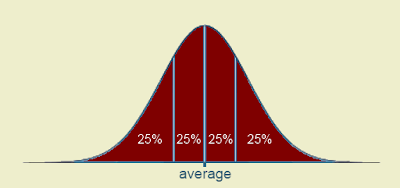
Here’s an example. There is argument of dismay expressed about the 25% of children in New Zealand who are well below average in literacy abilities, an average which was no doubt considered when setting the literacy standards in the first place. The argument is that the introduction of standards will help those in that well-below-average group.

I wonder if some of the contributors to that argument can understand what a distribution is, and the significance of an average based on that same distribution. Misguided use of statistics, even by authorities, is not unknown in disciplines other than education.

People statistics

In the late eighties, the Plunket movement was very enthusiastic, as it is today. Mothers with newborn children can choose to be visited by a Plunket nurse who administers advice when needed and who makes regular checks to record the development of children under their care.

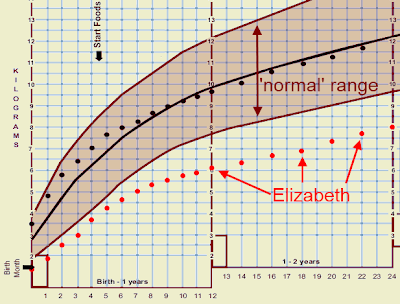
I knew a young family back then. Murray and Pauline who is a nurse, had a beautiful bouncing baby daughter. Both Pauline and her husband were petite people of delicate build and stature. At birth, Elizabeth was a small baby. The presiding doctors agreed she was normal for her birth weight. She was a healthy child who developed well in all respects.


Child Development Chart

One day I walked round to see the family only to find Pauline quite upset. She’d just had a visit from the Plunket nurse who’d said that Elizabeth was well below average in both size and weight. Pauline had been told that she should ensure Elizabeth was given the food required to lift her weight into the ‘normal’ range.

Pauline felt insulted and annoyed. Her reasoning was implicit. A petite newborn from parents of small stature would be expected to grow into a petite child, and subsequently mature to a petite adult. Over the years we found that was exactly what happened.

Furthermore, Elizabeth’s potential to maintain this has been with her since birth. It comes down to the difference between body size and body development. These measurable quantities are not the same.

The Plunket movement in New Zealand do a deal of good work in monitoring and caring for the health and welfare of the very young from birth. But the interpretation
of the growth chart by the nurse indicated that Elizabeth’s data was being clearly misunderstood.

Academic parallel

There is a parallel in the academic progress of children who are developing normally. That’s not to say that a child who is below what’s considered ‘average’ at an early age won’t continue to develop to have useful and perhaps even above average abilities in the future.


Bell Curve

But there is always going to be 25% of children who are well below average in literacy ability. Any standard based on what is expected of an ‘average’ child will indicate this when applied to a fair and random sampling from a nation’s children.

I applaud the arguments that are saying let’s improve the nation’s academic achievement through good teaching. Forget about assessment of the child at early stages as a comparison with what’s considered ‘average’. Let’s look towards progress and development in the child.

My hunch is that the introduction of standards will not bring about an understanding of what is good to look for in child development in literacy, numeracy or any other ability. Instead, it is likely to serve as a measuring stick for a whole range of things unrelated to child development.


Haere rā – Farewell

Tuesday, January 26, 2010

Elearning Patterns and Predictions

Kia ora tātou – Hello Everyone

In 1972 I took my first permanent teaching job in an elite Edinburgh secondary school. Just the year before, it had been a private school. James Gillespie’s High School (JGHS) always prided itself on its high standard of education.

A maximum class size was among many standards that JGHS maintained. It strove to have no more than 25 learners per class. The belief was that a finer relationship between teacher and learner could be attained. Through this practice, significantly better educational successes were achieved.

The number of scholars who left JGHS to take up
business careers, or went on to higher education, was proof enough of this accomplishment.

It was a fantastic start for me as a teacher to be with classes of this size. But it was certainly no preparation for the learning environments that confronted me in teaching positions I took up after that time.

In 1974, I had a form class of 36 learners in a school that maintained an average class size of 35.

An elearning counterpart

Almost 30 years later, research into educational achievement through elearning methods suggested that there was an optimum size for elearning groups led by a teacher.

In any group of elearners, there will always be those who can be considered ‘active’ – others who learn despite their apparent inactivity in engagement with a teacher or facilitator – and those who are neither active nor engaged significantly in learning. Time has to be distributed fairly in attending to the needs and wants of each these groups.

An e-teacher who has more than 15 to 20 ‘active’ learners in a group is always extremely busy. When the number of active learners increases much above 20, strategies have to be developed and practiced to cope with the constant learner-teacher activity that inevitably occurs in those environments.

Symptoms of stress and exhaustion are inevitable in any teacher who succeeds in engaging enough learners so that the active group comprises much above 25. My own experiences of this have been confirmed by those of my colleagues teaching in e-environments similar to my own.

A recent experience


Recently, I’ve been actively engaging in discourse with groups of people in Second Life (SL). In the months that I’ve assiduously studied in this networking environment, the number of ‘friends’ in my Friends List has slowly increased. The size of my list is now well over 60.

Within that group is a sub-group of 15 to 20 friends who actively use instant messaging (IM) to contact me whenever I am online. It is a great experience to network with people in this way. Not all of this is done locally – that is to say, my avatar is not necessarily appearing on the same screen as the avatars of those who are IMing me.

Of late, I have found it difficult to be online while following any intended
single pursuit. Two weeks ago, I became an ISTE docent, as avatar Kallan. In adhering to the expected commitment that comes with this office, I discovered that my group of ‘active’ friends caused me significant concern when attending to docent duties on campus.

At first, I was torn between being seen to be ignoring my friends, while attending to a duty which I enjoyed. Even sending messages of apology to IMing friends was an activity that I found distracting while attending to docent duties.

I’ve since learnt from other colleagues in similar SL situations that they often simply ignore the incoming IMs during the time that they are occupied with more immediate activities. Obviously they too have difficulty reading and responding to incoming IMs when engaged in other cerebral activity.

Elearning environment

In translating this to the elearning environment, I can see clearly how a teacher can become stressed and overworked. There is the part that is played by commitment. There is also the aspect of prioritisation.

Who gets priority from the teacher in a learning environment?

When a teacher is actively assisting several learners together, how does she cope when a learner puts forward
, out of the blue, a desperate plea for help?

What strategies can she employ to ensure that this learner, who may well be one who has never before communicated directly with her, gets the necessary immediate support?

What provisions must administration provide in a school to ensure that the number of active learners in a teacher’s group is kept to a manageable level?

How can administration ensure that teachers are not forced to adopt strategies to disengage themselves from needy learners in order to protect their own stress levels?


Ngā mihi nui – Best wishes