Showing posts with label technology. Show all posts

Tuesday, October 12, 2010

AADES LEADERS' FORUM 2010

AUSTRALASIAN ASSOCIATION OF DISTANCE EDUCATION SCHOOLS
29 September - 1 October

Venues: Te Kura (Day 1) and Te Papa Museum of New Zealand (Days 2 and 3)
Wellington, New Zealand


SUMMARY:

I was privileged to attend the AADES Leaders' Forum 2010.

This was a well attended three day event, with speakers from New Zealand and afar. While I attended all three days of the Forum,
I did not attend every session and there were some that were held concurrently. However, I report on all the keynote speeches here.


This was essentially a listeners’ event, though there was a little opportunity for participation from the floor.

Day One consisted of a late afternoon powhiri held at Te Kura.

Marcus Akuhata-Brown was the facilitator for Days Two and Three of the Forum, at
Museum of New Zealand Te Papa Tongarewa. His humility, balanced approach and sense of humour were evident in the elegant way he conducted the programme.

A feature of the Forum was the Māori music and harmony. Each guest speaker was thanked in a traditional way by music and song, a true mark of respect. It is a credit to Mike Hollings that he joined in with every one of those musical occasions (I’m sure he engineered them all) most times accompanying on his guitar. This part was altogether a most memorable, entertaining and cultural contribution to the atmosphere of the Forum.


DAY ONE

The Forum began mid-afternoon with the gathering of staff, contributors and visitors and a powhiri in Kauri room, Te Kura, followed by congenial time for refreshment.

Then followed brief welcoming addresses from Mike Hollings, Trish McKelvey and the Chair of ADDES, Bronwyn Stubbs, as well as short speeches from Karen Sewell and Janelle Cameron.

Karen Sewell


Karen spoke of the future that lay in the education of children. She spoke of the trauma that children suffered during and after the recent Christchurch earthquake, and how Te Kura had stepped in extremely quickly to provide support with this.

She talked of the complex and uncertain future that children will follow. Education must transform, not reform ‘the system’ in order to permit children to navigate intricate pathways. Teachers have a part to play in changing our children’s future.

Janelle Cameron

Janelle spoke of the digital divide – how she was still grappling with the technologies – how the digital age seems to overwhelm many people of her age.

Her metaphor for the happenings in learning today was like “a train going through (a station) and not stopping”.

She referred to the Internet and its use as a teaching tool and to what she called “Bloom’s Pedagogy”, the new “Digital Taxonomy” and their part in teaching today.


Day One closed with drinks and nibbles and a chance to network.


DAY TWO

Hekia Parata


Hekia gave us a National Party view of where teachers are at in 2010. She spoke of them focussing “on teaching rather than learning”
(I think she was referring to their learning rather than the learning of their students). Hekia explained that teachers do not seem to learn from learning, and referenced this to education research.


She referred to the mind/brain as the most important part of the being. Yet kids, all over the world, are still sitting in classrooms being taught by a single teacher using traditional teaching methods.

Hekia specially referred to the 1 in 5 students that were clearly being failed by the system – that schools focussed on crowd control rather than on learning.


Hekia’s description of Ruatoria formed a large part of the manifesto-like speech she delivered. She spoke of her family/ brothers, sisters/ community and what they did when she was a child.

Hekia spoke of the demography of New Zealand and of how many children were uninspired at school.

She spoke of the money New Zealand borrows every year to spend on education and the community. Hekia referred to the 1 in 5 ratio and that for many, the model is not working. Her concern was mainly about what she called “brown students”, and referred to their place in the diverse population that is evolving in New Zealand.


She spoke of professionalism that customises skills to give a service, and that such a service was needed by the 1 in 5 children in New Zealand: those that needed to find a job, for instance – a sector that “deserved all the attention teachers can give”.

Hekia summarised her speech by referring to the triangle of Identity, Community and Education: three important areas that provide the basis for learning in an individual.


Liz McKinley

Liz examined some of the statistics on Māori success in education from the Starpath project, University of Auckland. Her quote from Niels Bohr, “Nothing exists until it is measured”, summarised her approach.

She also examined some recent government statistics of Level 2 NCEA results, from 2003 to 2008, comparing Māori with non-Māori. Only 40% of Māori learners get to year 13. Less than half of these go on to study at tertiary level. She showed graphs indicating that in percentage achievement and in success rate, Māori learners were substantially behind learners from other ethnic groups.

Liz analysed these results in a number of ways: that 32% of Māori learners in a year 13 group will eventually go on to further study – that 18% of those will have achieved university entrance qualification – that 6% will actually enter university – that 2% will finish the courses with a degree – that 0.4% will go on to doctorate study.

She explained that Starpath, led by The University of Auckland in partnership with the New Zealand Government, is a research project (now in its 6th year) that focuses on the educational outcomes of New Zealand learners who under-achieve at secondary school. Starpath utilises:

  • research teams,

  • 5 high schools,

  • 1 university and 1 technical institute.

Liz spoke of the need for evidential material that schools require in order to make informed decisions – that schools were not getting help with bringing all available useful data/ideas/strategies together and with aligning these so that they could be used to improve learner outcomes.

She explained that schools do collect data on student learning and achievement, but the data is not centrally stored. She asserted that schools do not feel that ownership of this data is important. She stressed that there was a real need for concerted strategies so schools could usefully collate data related to student achievement and use this to accomplish an improvement in learner achievement.

Liz spoke of the Academic Counselling and the Target Setting (ACTS) programme and how they improved final year NCEA completions. The biggest gains were made by Māori and Pasifika students, with 16% more Māori students and 20% more Pasifika students achieving important learning in NCEA Level 1 Numeracy and Literacy.

Liz concluded by warning that gains for Māori learners were lessening - that many schools had a plethora of programmes, 84 in some, based on teacher interest rather than what could benefit the learner. She appealed that this was actually a moral issue that needed attention, by all parties including teachers in order that it be addressed effectively.

Bentham Ohia

Bentham, CEO of Te Wānanga o Aotearoa, gave an overview of the Open Wānanga – a “Māori Higher Learning Tertiary Institution” of 37,000 learners – 40% of those do not have a secondary education.

He put a number of questions:

  1. What counts as knowledge? What knowledge counts? Who decides?
  2. What counts as success? What success counts? Who decides?
  3. What counts as assessment? What assessment counts? Who decides?”

Te Wānanga o Aotearoa is unique:


  • kaupapa wānanga
  • unique programme-offering delivery
  • home based kaitiaki (guardian) supported
  • monthly cohort enrolments
  • centralised support
  • minimised restrictions.

Viv White

Viv spoke briefly of Big Picture Education Australia (BPEA). She then looked at some learner statistics and other related learner information:

  • 14% learners not learning or earning – 50% in some places
  • 20% fail to complete year 12 – 50% in some places
  • complex social background
  • distance education is not immune to the same problems that exist in F2F systems.

She stressed how serious these facts were and that a new model was called for. Viv then put the question that I had asked her at TCS Forum in May this year(!) – basically:

“Can we create a Big Picture Distance Education model?”

Viv then returned to the Big Picture model:

  • 1 learner at a time (which is how Te Kura works)
  • small by design
  • advisory 1 – 15 | 1- 17 |
  • Learning Training Internship.

Learners could achieve improved outcomes: engagement – graduation – tertiary learning. She spoke of beginning with network connections – developing a community of practice and commitment to collaborate – building a system of influence: not with critical mass but with critical connections (BPEA and Te Kura).

Jen McCutcheon

Jen defined authentic learning in the context of Te Kura, explained the process and outlined some of the approach used – one that focussed on the learner in context. She spoke of how it relies on rich conversation between the Learning Advisor, the learner and whanau.

Jen explained how finding the centre of what interests and impassions a learner was an all important part of that process. It’s then that a start can be made on building relevant programmes around the learner and nurture these with frequent ongoing discussions.


Jen went on to define what constituted a ‘rich conversation’: goal setting – identifying ‘aspirational’ goals – career exploration – interviews and talking with people – job-shadowing – resetting goals. She mentioned the part that Gateway, Star and other programmes can play in the development of this process.

She described the ‘tail of underachievement’ and mentioned the consequential 25% of people aged 15 to 19 years who are unemployed.

Westley Field

Westley is Director of Online Learning, Skoolaborate. He began his delivery by demonstrating an online delivery/facilitation by an avatar in Second Life (SL). Westley then Skyped his friend, Chris, who was the person behind the SL avatar.

Westley spoke briefly of the developments in online learning at MLC School. He spoke of how technology makes the routes to achievement more facile, and not just in learning but also in creating commercially useful objects, such as the Doritos commercial he showed us and that was made for $150 by a teenager using readily available equipment.

He encouraged that we should “try things new” – to “move forward with real action”. He spoke about personalised (online) learning. He spoke of how to get the attention of learners if they have computers in their hands. He spoke of how “knowledge”, and how to use it, takes on a new meaning with the developments in technology, Google and the Internet.

Westley talked about giving people experience in the use of technology – in particular giving young learners safe, ‘unblocked’ experience in technology use. He spoke of the technologies that can change learning, including the development of the e-book such as the Amazon Kindle.

He referred to the improved success by learners using online learning productively with other learning methods compared to those learners who are in the classroom without such technology.


Sandy Dougherty & Nathaniel Louwrens

Sandy and Nathaniel gave a presentation on their experiences in trialling Active Worlds. The study was to evaluate Active Worlds as a learning technology and also its suitability in a distance education setting.

They demonstrated a treasure hunt that had been built in the 3D environment of Active Worlds. Some of what they reported was about their own initial experiences in the 3D environment – some of the seeming ‘chaos’ perceived by people who are new to this technology – which later developed to a successful resolution.


Their intended focus was to be on working with learners collaboratively and how to get learners to work together. The reality was slightly different.

Sandy and Nathaniel found that young learners (years 7 to 10) learnt the technology skills for themselves very quickly, skills that the teachers had taken 2 terms to learn. They also reported that the learners preferred online (txt) chat rather than using the voice chat, though they were comfortable with the teacher using voice chat in instruction.

Sandy was careful to get useful (and fascinating) feedback from her learning group, to which she put a number of questions. Asked how they learnt, Sandy’s students gave a number of interesting answers, among which were ‘playing’ and ‘practicing’.

Asked if they needed a teacher there was met with a resounding, “YES”. The children preferred the teacher speaking to them rather than using the chat box. The common feeling expressed by learners was that the whole learning experience was “awesome!”


About the technology . . . learners felt that though it was a bit clunky, it was like playing a game that was really school. Navigation in commercial games technologies tend to be far more facile in comparison and the 3D renditions are often superior to what they experienced in Active Worlds.


DAY THREE

Mike Hollings – Walking in Two Worlds

Mike spoke of the money poured into education and the efforts that are not actually achieving learning. He cited Cisco’s The Learning Society and stressed that the cost of education should be tax-efficient.

A successful education system has to be based on the principle that it is for everyone and must embrace ones personal culture while at the same time supporting innovation. He stressed that there was a need for a huge change in present systems. He cited Phillippe de Woot’s need for societal educational metamorphosis and referred, once again, to Allen Curnow’s Landfall into Unknown Seas:

“Simply by sailing in a new direction
You could enlarge the world.”

Mike spoke of leadership today and the huge diversity of theories that are based largely on western ideas. He asked of leadership, “what could we learn from other wisdom?”

He drew attention to how Māori people spend a lot of time ‘going back’ to their cultural places, communities and the related pursuits. The educational system in New Zealand does not acknowledge this cultural aspect as much as it does that of western cultures in activities such as music, opera, and dance.

Mike gave an overview of some of the wisdom from Māori leadership, and how it focussed on the needs of people and the resources they needed – the understanding of communities and their tribal/cultural boundaries. Māori leadership qualities are not necessarily accepted or respected in the wider community in New Zealand. Mike listed some of the elements of that leadership:

Manākitanga – hospitality
Rangitiratanga – weaving people together
Whanaungatanga interdependence
Wairuatanga – spirituality
Kaitiakitanga guardianship
Whakapapa – genealogical connections
Te Reo Rangatira – Māori language

Mike observed that community intellect is at risk when languages are lost. He also spoke of the worth of trust and the value of openness – that for trust to exist, intentions must be clearly understood and patently visible.

Mike summarised the thrust of his speech by saying “we cannot (always) rely on western systems”. He referred to the importance of locality in determining who we are and where we are at in New Zealand. He used lines from the poem Lost, by David Wagoner, to illustrate this:

Lost

Stand still. The trees ahead and bushes beside you
Are not lost. Wherever you are is called Here,
And you must treat it as a powerful stranger,
Must ask permission to know it and be known.
The forest breathes. Listen. It answers,
I have made this place around you,
If you leave it you may come back again, saying Here.
No two trees are the same to Raven.
No two branches are the same to Wren.
If what a tree or a bush does is lost on you,
You are surely lost. Stand still. The forest knows
Where you are. You must let it find you.

Jen McCutcheon and Viv White

This was a panel session introduced by Marcus Brown where Jen and Viv spoke freely of their vision of the Big Picture.

Jen gave a brief summary of the Big Picture process including some of the best practice used. There then followed a brief session of questions from Marcus and from the floor. Jen and Viv both spoke to the questions that were asked.

Brenda Frisk

Brenda summarised her vision of what she called “visual knowledge” and its place in 2010. She spoke of the need to reduce the barriers that may exist between people and their use of available technology, and also of the need that industry has to learn to manage technology. She posited that teenagers lose trust and respect for people in industry when they see that they do not have skills to use the technology effectively.

Brenda spoke of tacit knowledge, implicit knowledge and cultural knowledge and their use to the people employed in a company. She emphasised the need to have online portals for children to access at any time of the day.

She spoke of the frustrations that an organisation has in finding and in accessing data with technology and that there was a need to have technology built for people, not just for the technologists to use. Its property and function need to be relevant, evidential, contextual, credible and collaborative.

Brenda spoke of two important reports, the Horizon Report and Learning Powered by Technology, and summarised some of the key elements brought out in these. She then spoke further on visual knowledge and explained and demonstrated how 3D (stereoscopic) visualisation could give a better perspective in viewing machines and other structures in context.

Hine Waitere

Hine introduced herself from her tribal background, then spoke of ako, a pedagogical concept that encompasses both teaching and learning as parts of the same process. She illustrated how ako had been brought out in the Forum with reference to those presenters who had told of their experiences in learning (and teaching) during their presentations, and the stories they told.

She spoke of Māori carvings and tukutuku and how these also have stories to tell. They are different forms of literacies. Hine spoke of her appreciation of landscape but also recognised that there was much there she did not understand.


Hine read the story, Butterflies, by Patricia Grace, depicting ‘difference’ without a need for that difference to be fixed. She went to the heart of this idea by referring to how the grandfather did not correct the teacher, but simply explained where she was at.

She also illustrated how teachers have power and authority to direct ‘values’. She asked,

“What are the values that lie at the core of our (teaching) practice?”

She then talked about the tail of young learners who struggle with their ‘education’, listing the 5 Ds:

Deficit
Deprivation
Disadvantage
Difference
Diversity.

Tuesday, March 9, 2010

Authentic Elearning?

Tēnā koutou katoa – Greetings to you all
Sculpted Earth by Magnuz of Sweden - Badger
When a learner is in an environment that is relevant to what's being learnt, the likelihood for effective engagement is high. Learning by doing is supposed to be one of the most successful ways to learn.

Both these factors – the relevant environment and the doing – are thought to provide jointly the greatest incentive for a learner to take interest in what is to be learnt. They form the basis for what is referred to as authentic learning.

For as difficult as such situations are to establish and sustain in face-to-face situations, elearning environments can present major barriers to authentic learning that are almost impossible to overcome unless the elearning vehicles are in situ.

Typical examples of these are online tutors for word processing, graphics applications or other computer functions where the learner is involved in using mouse and keyboard to operate a tutorial directly relevant to the application.

I cite the Southern Hemisphere planisphere with a built-in tutorial as one example of an in situ learning vehicle in a junior Science elearning resource.

The examples given above are all very well, but unless a considerable component of what is learnt is transferable to other purposes, the learning acquired by the learner has limited use elsewhere. One of the characteristics of authentic learning is the transferability of the learning to other situations or disciplines.

Two examples where generic and transferable skills can be learnt are online instruction in touch-typing, and the use of a flight simulator as part of training to become an aircraft pilot.

Kallan and Tuxedo presenting a session in building in SL

Recently I was privileged to share in the facilitation of a session sponsored by ISTE, teaching people online to manipulate and assemble prims, the building blocks of Second Life (SL).

As well, part of the duties I perform as an ISTE docent in SL involves assisting and teaching newcomers to that environment by the use of text and voice chat. The learning facilitated in these situations is authentic.

People who come into SL need to acquire new skills. Most who stay to use that environment want to learn skills that can only be acquired online. But other than exercising skills in associated disciplines such as art and design, the skills I teach to newcomers are only useful in Second Life. And here is the conundrum associated with authentic elearning.

Apart from learning that is directly associated with the elearning application or platform, how is authentic learning achieved online?


Ka kite anō – Catch ya later

Wednesday, March 3, 2010

A Hierarchy of Learning

Tēnā koutou katoa – Greetings to you all300th Post
Heat Exchanger - artist ken allan
My work environment has been a bit noisy lately. The school is having the roof renovated. The building’s air-conditioning units have been disconnected during the time of this refurbishment.

It being summer, there’s a need to open windows and to bring in industrial air-conditioning units to maintain a workable atmosphere within the building. At the beginning of this week, contractors wheeled two of these units into the space close to my office area, plugged them into the mains and switched them on.

Other units were similarly introduced at points throughout the building. The Science teachers who worked in the areas, including myself, viewed this activity with amusement. It was evident that the contractors knew nothing about thermodynamics.

It sucks

The heat exchange part of an air-conditioning unit operates in a way similar to a refrigerator. In normal use, the unit sucks warm air from the room through a cooling unit and filter.
Fresh air from outside the building is drawn in through windows and other openings to replace the heated air expelled during the process.

The resulting chilled air is blown back into the room while the removed heat is air-pumped to the exterior, usually through a duct in a window.

In the case of the units that we observed, there was no such venting. Instead, the hot air from the action of the cooling unit was being pumped back into the room. It was as if a fridge had been turned on and its door had been left wide open. In such a circumstance, the fridge does nothing more than make a noise and heat the room.

The overall effect of the air-conditioning units being used in this way was not unlike that of using large blow heaters. In no time, people started to complain about the rising temperature.

A little learning

Science is a wonderful thing. Its principles are being utilised in just about every piece of technology that contributes to our lives today. Of course, an understanding of scientific principles isn’t always necessary to use or install the equipment that puts these principles into effect.

There are at least three levels of understanding that can allow one to realise the significance of a scientific idea, such as the thermodynamic principles that were put to use in the construction of the air-conditioning units:

  1. It works provided certain conditions are met according to a recipe for installation. For the air-conditioning unit to be effective, it has to be functioning and have its required vents clear, one of which has to be ducted to the exterior.

  2. It works as it follows the thermodynamic idea that heat can be pumped by using a small amount of energy that is eventually released as heat (which is why the fridge with its door open does nothing more than heat up the room).

  3. It works, and its function can be explained by thermodynamic principles:

    a) energy can neither be created nor destroyed,

    b) heat energy is released when a gas is compressed so that it condenses to a liquid and this same heat is taken in when the liquid is allowed to evaporate
    – this is what happens in the heat exchange unit of a fridge,

    c) some energy will always be wasted when heat energy is pumped using mechanical means – entropy is always increased as a consequence
    .

Understanding at level 3 can be achieved by senior secondary school Physics students.

Level 2 can be understood by able students of Junior Science.

Working recipes that define the factors that are important in level 1 need only be followed when it comes to the correct and appropriate installation of a piece of technology in general circumstances.

The example that I unpack here shows how related learning can apply at various levels to the curriculum. What is significant is that the most elementary levels of learning are still important to the correct use of technologies that involve sophisticated principles in their design and construction.

Sorted

As it happens, the contractors were notified by Science teachers about the correct use of the air-conditioning units which were immediately switched off. Appropriate locations near windows were then found. Necessary ducts to the outside of the building were fitted correctly to the machines within 24 hours.

Cicada
Through all this, the cicadas continued their sibilant summer chorus.

Ka kite anō – Catch ya later

Thursday, February 11, 2010

Elearning? Pedagogy?

Kia ora tātou – Hello Everyone
Southern Georgia teaching an intermediate session to ISTE members in Second LifeSouthern Georgia teaching an intermediate session to ISTE members in Second Life

Isn’t it strange that we read, hear, and see a lot about elearning, but we so rarely read, hear and see as much about eteaching?

Pedagogy?

I keep coming back to this topic. It is so vital to everything to do with teaching. The term, and all that it implies, also embraces elearning.

Elearning?

By implication, the focus is on the learner, and this is fine up to a point. But it is as if what goes on in the teaching is silently implied in the word elearning. The teacher has become the silent participant.

Well I’m going to stick my neck out here and say that there is a need for a change in emphasis so that elearning also implies an appropriate involvement by a teacher.

I’m not campaigning for teacher centred learning – not at all.

I’m agitating for pedagogy to return to its rightful place where a teacher is involved in the learning, which includes elearning.

Digital indicator

A simple examination of my blog’s statistics shows that the posts on pedagogy are considerably less popular than posts on learning. Yet they were written with the same passion, care and attention I give to posts on other topics.

My hunch is that for some reason not yet too clear to me, there is less interest in the part played by the teacher than the technology when it comes to elearning.

Interesting, isn’t it?

Ngā mihi nui – Best wishes

Friday, January 22, 2010

On Censorship and Human Nature

Tēnā koutou katoa – Greetings to you all

Censorship, Debate and Discussion

WARNING - The content of this post may disturb some readers.


The vagaries of censorship are mentioned throughout Hillary Clinton’s recent speech advocating Internet Freedom. Censorship is an action that often takes place behind the scenes. It is sometimes difficult to detect. You can be sure that someone somewhere will be confused, disturbed, annoyed, or even enraged when its occurrence is noticed.

Lately, printed news has come under threat. There is a belief that blogging might replace newspapers with a more up-to-date, less censored conduit. As well, the Web2.0 channel is purportedly a space for open debate and discussion.

Well, I wonder about all this. I believe that there is a place for censorship. Furthermore, my experience tells me that censorship is alive and well and is existing quite comfortably – in the blogosphere.

By the way, this post is not meant as a rant.

Moderation

During my first month of blogging I was introduced to some of the technologies that permit a blogger to choose whether or not a comment is published. Comment moderation is such a facility.
Some blog applications can even permit the content of a comment to be edited, before or after it is published. Comment moderation also gives bloggers relief from the increasing nuisance of spammed comments.

Hand in hand with all this is the idea that, through the provision of comment guidelines, commenters can sometimes be given the opportunity to learn what is likely to be accepted by a blogger on his or her blog. (Here’s a link to mine.)

Comment guidelines give the valid reasons for the culling of comments that may be in contravention of the blogger’s guidelines.

Biased opinion?

But comment guidelines are not the only criteria that may be used by a blogger who culls a comment. Am I not entitled to delete any comment that appears in my list of comments to be moderated, whether or not it meets all criteria in my comment guidelines?

How could I be accused of any discrimination even if I do cull comments containing valid opinions other than those that are aligned with my own? Who’s going to know?

You might say, “But isn’t this still a form of raw censorship?” Well of course it is. It also stymies healthy debate and discussion.

Okay, I’m being a tad hypothetical.

Or am I?

My quality comments

Over the years that I have been actively commenting on blogs, I‘ve witnessed this form of censorship. Of all the hundreds (perhaps thousands) of comments that I’ve entered against posts on other blogs, there have been a significant number, through the bloggers’ discretion in comment moderation, that have never appeared on the Internet.

You could say that this is a reflection on the quality and calibre of my comments. Well, there are enough of them still left out there. Take a look and judge the quality and calibre of my comments for yourself.

But I have always been careful to note, when my comment was removed or excluded, if the blog had any associated comment guidelines that I may have contravened. Most bloggers do not provide comment guidelines. I put it down to raw censorship.

So you may think that the blogosphere is entirely a place for freedom of expression. Just check when you leave comments on posts that have comment moderation. You could be surprised at the proportion of your comments that never appear on the blogs you post against.


Ka kite anō – Catch ya later

Sunday, January 3, 2010

Second Life Scripting Colour Code Explained

Kia ora tātou – Hello EveryoneOpens a new window in Koru
I thought I’d start the year off with a colourful post. I’ve been doing some building in Second Life (SL) recently. I got stuck when I came to interpreting how the colour codes work when scripting some effects.

Perhaps I should explain for those who are not so familiar with SL.

All of SL, including the avatars that frequent it, is constructed from what are known as prims, or ‘primitives’ – polygonal three-dimensional shaped objects, like the ones Kallan demonstrates here.

Of course, not all that can be seen in SL is made entirely from these primitive shapes alone. They can be distorted by an effect, called sculpting, to reshape, or ‘tortured’ by changing their shape and size by other means.

Painting things in SL
Opens a new window in Koru
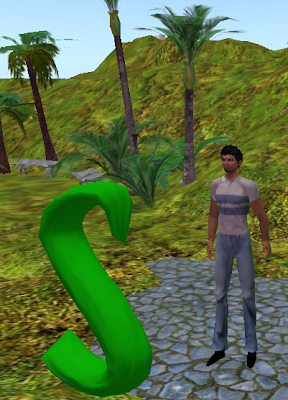
Colouring, or painting prims can be done in at least two ways. Choosing a single colour by using the colour picker, is a way of painting. The S-shaped sculpted sphere, above, was coloured this way.Lara
Another is selecting a texture, which is really an uploaded image, and using this to give a defined pattern or intricate detail to the prim.

The picture here shows my friend Lara wearing a pendant that is decorated and coloured using this texturing method.

The standard RGB colour code is used. Each colour is defined digitally (8-bit) by its Red, Green and Blue components – shown as numbers between 255 and 0, in so-called vector arrays.
Colour Picker

The code for white is (255, 255, 255) and for black is (0, 0, 0). All other available colour combinations in the colour picker occur as permutations between these two vectors.

Scripts

Opens a new window in KoruOne way of imparting effects to objects in SL is by using scripts. In Lara’s candle, for instance, she uses a script that gives the wick the effect of a flickering flame.

When it came to scripting, I was completely baffled at first by colour codes and how they worked. Lara, showed me that an arithmetical code is used in scripting – different from the 8-bit coding used for colours in non-scripted prims.

The arithmetical code embraces a similar RGB range of colours, with some minor limitation in the range of hues available.
The RGB components are represented by numbers between 1 and 0, instead of 8-bit digital numbers between 255 and 0.

An easy conversion

Lara explained it to me this way:

Whereas 255 is the maximum number allowable in the 8-bit digital code, the corresponding maximum number is 1.0 for scripts and for some other uses in SL.

This means that any RGB code has to be converted to the equivalent code before it can be used in a script.
The numbers in the 8-bit digital codes must be divided by 255 to be corrected for use in scripting.The code for white used in script becomes < 1, 1, 1 > and the script code for black becomes < 0, 0, 0 >.


sapgreen(48, 128, 20)

The arithmetic in the code conversion for sapgreen is as follows:
    48 converts to 48/255 = .19

    128 converts to 128/255 = .50

    20 converts to 20/255 = .08

So sapgreen 8-bit digital code (48, 128, 20) becomes < .19, .50, .08 > .
Another example is blueviolet. Its 8-bit digital code is (138, 43, 226). The code for the colour used in script is < .51, .17, .89 >.The same process can be used for any other colour expressed in 8-bit digital code.


I am grateful for assistance and advice given to me by Lara.


Ka kite anō – Catch ya later

Thursday, December 31, 2009

Elearning Prediction / Hope 2010 – Next 10 Years

Kia ora tātou – Hello EveryoneFuture City
My prediction and hope for 2010 are tempered by what I learnt and gathered in 2009 and before that. However, my hope does not match my prediction.

I suspect that what I hope happens will not come to pass.


I’ll not dwell on the particular. That is too narrow for the future. Instead, I’ll attempt to look to the bigger picture of where a Nirvana in elearning might lie.

Surmise


Commercialism and consumerism will rise with renewed vigour, despite the recent and global economic collapse that many experts say was brought about through, among other things, flagrant practices of commercialism and consumerism.

Rather than learn from past errors and misguided pathways, society will resume its hazardous journey and continue to career along a wavering and obstacle-strewn path to uncertain success.


Why do I feel this way? There are many reasons. I will cite only one elearning example here.

At the beginning of last decade (2000 – 2003) I watched the rise and fall of what might have been a brilliant concept in learning resource development – that of the learning object.

I may be wrong here – I don’t think I am. But my feeling is that financially pushy commercial factors, far larger than the budgets for learning itself, launched into the sky and eventually nosedived to destruction what could have been a worthwhile elearning concept, in the form of the learning object.


Pandora relic


I have one hope for this year and for the rest of time.

Sheryl McCoy’s recent post, Another Balkanized Technology Rip-Off, puts into words exactly how I feel about the way commercialism and consumerism have continued to hinder the betterment of society.


The drive to sell, through a strategy of planned obsolescence despite genuine need, continues to come in the way of establishing real expertise in the use of technology. It stymies creativity. It comes in the way of progressing to better things, while purporting to advance and progress towards improvement. It wastes time, resources and money.
I have worked through a decade of watching incompatibles, non-connectables, lack of connectivity and even incompatibility between different versions of the same commercial devices/applications/appliances.

I’ve wracked my senses, grappling with upgrades to versions of machines, computers and their applications. All in an attempt to continue to use these for the purposes that I had worked to acquire consummate ease in and reasonable expertise in.


What I discovered was that I was grounded, once again, when the latest version (of whatever) was released. It made me consider seriously and review any further dubious opportunities for ‘upgrading’.

Valuable opportunity

I hope that we can learn from the mistakes of the last decade, and of last century. Let’s not push mistakes into the past as history to be forgotten. Let’s not claim we are assured success by simply ‘moving right along’.

Let’s start putting to good use what can be salvaged in learning from our past mistakes and successes, and move to a richer and prosperous future.


Rangimārie - Peace in Harmony

Thursday, November 12, 2009

Lead by Example

Tēna Koutou Katoa - Greetings To You All
The Big QuestionIt could be that the purpose of your life is only
to serve
as a warning to others Ashleigh Brilliant.


This month, The Learning Circuits Blog has the theme:

‘Presenting the Value of Social Media for Learning’.


Tony Karrer puts The Big Question:


How do I communicate the value of social
media as a learning tool to my organization?


The answer I have for him is, perhaps very slowly.


In the year 2000 I used Web1.0 technology in an attempt to emulate Web2.0. At that time I didn't know what Web2.0 was.

As senior teacher, I began designing web pages and developing elearning resources permitting learner interaction and feedback.
I was labelled as a geek. This was despite the organisational approval, funding and planning time provided for me to engage in the development of elearning resources.

In 2002, as a full-time elearning teacher, this opinion of my role in using digital technology was confirmed by a newly appointed manager.

When she saw what I was doing using Web1.0/Web2.0 technology, she openly declared that she was not a geek. She affirmed that she could never embrace what I was practicing, for she did not want to be seen as a geek.


In 2007, a leading light on the staff created her blog especially, but not exclusively, for staff use and interaction. I was astonished that, from an organisation that supported hundreds of teaching staff, there were so few participants who entered into discussion on the blog.

In 2008, while working in the same organisation, I started a blog.

I discovered that many of my colleagues viewed this practice as a risky business. Some were still not sure what a blog was.

They had a vague idea that web pages, blogs and wikis, were all related in some way, but their exact function, usefulness and operational value were unclear to many and often viewed with suspicion. I have many colleagues who still find Web2.0 quite elusive.


In 2009, I'm pleased to share the blogosphere with several work colleagues ( 1 ), ( 2 ), ( 3 ), ( 4 ), ( 5 ), ( 6 ), ( 7 ) who actively maintain their blogs and post regularly.

Some have been blogging since early 2007. Whether anything I did had any influence on my colleagues to do likewise is purely a matter for conjecture. It’s been a long time.


But when it comes to communicating the value of social media as a learning tool, leading by example may be as good a way as any.


Rangimarie - Peace and Harmony

Tuesday, October 20, 2009

Binge Thinking

Kia ora tātou – Hello Everyone
Opens a new window on The Big Question
This month, The Big Question on the Learning Circuits Blog is to do with New Presenter and Learner Methods and Skills.

Multitasking is now every presenter’s problem. Tony Karrer posits, “that there are things that presenters and learners should do to address this.”

Multitasking is binge thinking. It has the potential to distend the capacity of the brain so that normal thinking to do with any one task, including learning, becomes severely impaired. Tony says it all here.

Scott Flansburg is a supreme example of how a person can perform amazing calculative feats. He executes thinking skills that traditionally command extremely high concentration levels and all the thinking power that permits this. His unique ability to close down areas of the brain normally associated with other peripheral tasks makes him a matchless unitasker.

Thinking tires the brain

I am convinced that people often shut down areas of their brains automatically to make it easier to think. For instance, it is now known that when making decisions, the brain’s executive resources can be taxed to an extent that cognitive ability is considerably impaired. To prevent this happening in some situations, fast track routines are adopted.

Too much decision making over a short space of time literally tires the brain. Do people make decisions when attending a presentation? You bet they do, if they make a genuine attempt to learn from it.

PowerPoint and other potential vagaries

So why is it that when the audience is supposedly concentrating on the single task of learning, the presenter insists on giving them a series of tasks to perform synchronously? Cognitive overload associated with the misuse of PowerPoint has become a talking point. It is an issue because it’s real.

Learners well know that when the presenter reads the text from a PowerPoint slide, the best thing to do is to shut the eyes and listen.

So why is the text on the PowerPoint slide in the first place? For the presenter? No! It’s there because the presenter knows nothing about cognitive overload. A better way is for the presenter to shut up and let the learner do his or her own reading.

Take note

Tony refers to backchannel as a distraction for the presenter. I’m not surprised he finds it distracting. It is nevertheless an inevitable activity if learners are engaged in taking notes, by whatever means they use.

Through years at school, university and attending hundreds of seminars since then, I have learnt to take notes while giving nearly full attention to a presentation. It’s one multitasking practice that I’m good at. But not everyone has this skill.

What I’ve found often helps is if the presenter provides printed notes on the PowerPoint bullets – before the presentation. This frees up the brain when it comes to taking notes. I just write my additional notes on the PowerPoint printout.

Cognitive engagement

But there is another aspect to presentation – and that is of intent.

What does the presenter really want the learner to take away from the experience? If the seminar has a sales pitch, it may be better not to dwell too much on the facts and details that a learner may take away.

Research has shown that the verbal content of a presentation, whether in speech or text, is only a small part of the total message conveyed to the attendee. How often has a conference goer raved about a ‘keynote’, reporting that the best thing about the presentation was its entertainment value?

What if the presentation was entirely lacking in entertainment, yet the same factual information was presented? Herein may lie a pedagogical message.

Entertainment provides two important features to the learner. It provides the necessary breaks between learning tasks and prevents the possible onset of cognitive overload brought on through multitasking. It also adds interest and factual significance by association.

Rangimārie - Peace in Harmony

Tuesday, September 29, 2009

A Session in Snapshots – Networking and Learning

Tēnā koutou katoa – Greetings to you all
Arriving at the Workshop
I had intended that the post Connected World in Second Life would be my last in the series on Second Life (SL)
this month. Well, I just have to squeeze in another.

Opens New Window Southern GeorgiaBeing a new ISTE member and an avid enthusiast for learning,
I happened to touch down on ISTE Island yesterday and met up with friend and fellow educator, Louise Borgnine.

She was assisting with the first of a series of intermediate sessions for educators in SL facilitated by
Southern Georgia.

The objective was to learn how to do things that will enhance teaching presentations in SL. The venue was over at Brahma.

Being new to all of what is SL, and in much need of the associated skills, I accepted Louise’s advice to teleport to the workshop.

Southern Facilitating the Workshop
The number of attendees was impressive. I must say that I found the facilitators extremely helpful. When I got stuck (and I did!) there was no end of assistance ready at hand. That’s what good keen educators are like I guess. Always ready to help a willing learner.

Something else impressed me, and that was how wonderful it was to arrive at a distant venue, be attending a session with people from different countries, and be greeted with the customary formalities without having to shift out of my ergonomic chair.

Workshop ParticipantsKallan, wearing his ISTE student badge

There were other features that made me feel welcome. It was a participatory session. I was recognised by the facilitator by name, and he acknowledged me being there more than once. That was something special for one who is so new to SL and feeling a bit anonymous.

TuxedoThen there were the facilitators, among them docent Tuxedo, who was kind and helpful. She was especially helpful when I dropped my laptop and got left behind. Tuxedo helped me pick it all up, and got me started again and following Southern’s instructions.

This was no ordinary workshop, yet it had the presence and feel of a real life workshop.

I learnt a lot. I even got some session notes to take away, as well as a free digital TV presentation screen, which I managed to get working.

“What’s with SL?” I hear my readers say. What’s possessed Blogger in Middle-earth to let himself be led astray by all this virtual reality stuff?
I read some comments
to that effect on a post only a day or so ago.

Southern GeorgiaNo. I don’t think I’m being led astray here. It is the reality of virtual conferencing – no less contrived than video conferencing, with a lot more freedom to move about and participate.

We had a participatory session at the end when Southern rallied us to flex our new-learnt skills in a game of look and see
– an active finish to a rigourous session in using the camera facility in SL.

A transparent dice box, suspended in mid virtual space, rolled the dice for us to observe and call. It wasn’t easy, for we had to navigate our cameras in which ever direction was called, to declare the numbers on the dice. It was fun – as much fun as I have had at many well run training sessions in real life.

The Transparent Dice Box
Next day, I dropped into the ISTE Conference Centre to be greeted yet again with a welcoming smile, this time from docent Mo Hax. He was kind enough to chat and pass on to me his useful site on SL.

These people are volunteers. They are trained educators and they are teaching their hearts out in SL. I might just drop in on another session some time soon. What do you reckon?

related posts - > ( 6 ) ( 5 ) ( 4 ) ( 3 ) ( 2 ) ( 1 )

Ka kite anō – Catch ya later