Showing posts with label internet. Show all posts

Wednesday, February 17, 2010

Using Elearning Resources and All That Gear

Tēnā koutou katoa – Greetings to you all

This week I submitted my plans for three Science learning resources that I will be writing this year. The expectation is that the drafts will have an online component.

I say drafts, for when the resources are built and accessible to the learner, the intention is to amend and refine them, as part of an ongoing process, dependent on analysed feedback from the learner.

Each resource set will provide teaching and learning material for a learner to achieve an associated NCEA Level 1 Science standard.

There will be no formal question-and-answer written tests for these.
All of them include reporting of a sort – a way that learners can show their communication skills – as well as demonstrating their knowledge and understanding of the various aspects of Level 1 Science.

Learning and assessment

I was heartened by Britt Watwood’s response to my last post on elearning and pedagogy.

He kindly included a link to the Virginia Commonwealth University Online Teaching and Learning Resources Guide, which I read. It was a joy to see the inclusion of the terms formative assessment and summative assessment, with appropriate links given so that their use is unequivocal.

Summative assessment will take the form of teacher assessment, driven according to assessment schemes written against the NCEA Level 1 Science standards. But the formative assessment that has to occur before that will consist of an assortment of methods including:

  • self-marked booklet study
  • computer assessed interactive activities
  • teacher feedback
  • creating and maintaining learner engagement.

For those who are unfamiliar with the term, formative assessment is a means used by a learner to reflect on what’s been learnt and understood. A course of action may be followed to do further learning if required.

Formative assessment can involve a teacher who provides feedback to the learner. It takes the form of automatic computer feedback in interactive elearning resources. Or it can be a checklist of answers or explained processes to supplementary examples given in a printed resource book.

A rudimentary example of formative assessment is a list of answers to clues in a crossword puzzle.

Down to Earth


One of the standards involves investigating an astronomical or Earth science event. When writing my draft resource for this standard, I will be pulling on all appropriate techniques in elearning that are available to me and my cohort of learners:


I will keep in mind the usefulness of games-based learning and will try to remember all that’s considered to be elearning myth.


Ka kite anō – Catch ya later

Sunday, October 18, 2009

Image

Kia ora tātou – Hello Everyone
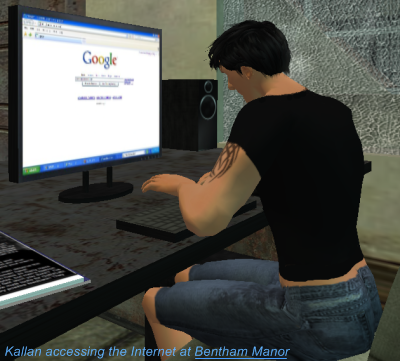
Open new window at Bentham Manor
The web image and how it operates are often misunderstood. Hypertext Mark-up Language, more commonly known as html, was invented to process text size, shape and colour on the Web.

When it was realised that html and related codes could be used to handle images, the Internet became a viable commercial medium.

The pixel

The Pixel
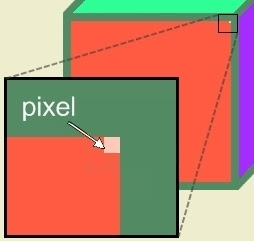
Close examination of images, on screen or when printed, shows that they are made up of many coloured spots, dots or squares. These are called pixels. The word pixel (picture-element pix-el) can also refer to the digital information associated directly with the coloured spot, held on a computer or transferred in a download.

What can be confusing is that ‘pixel’ is also used when referring to the smallest element that displays a single spot of coloured light on a monitor or TV screen. These tiny elements are permanent parts of the screen hardware. They are not the same as the pixels in the image that effect the display.

Image file size

A popular misconception is that the dimensions of an image, as it appears on the screen, are to do with the space the image occupies in computer memory or on disk. The term ‘image size’ can also be misleading, though this term refers to the capacity of an image to occupy space in computer memory or on disk. It’s more usual to refer to it as the image ‘file size’, measured in kilobytes or megabytes.

Image dimension

Coloured Shapes
The physical size of an image on the screen is another property that’s often misinterpreted or misunderstood. Images are really two dimensional things. Despite tricks of design, it’s not possible to have an image that is triangular, round or any shape other than rectangular, unless there is some distortional fault with the printer or screen.

An image has a height and a width, which make it easy to define its dimensions. These two lengths are measured in pixels, but can also be given in mm or cm. Though variation tends to be slight, the physical accuracy of image dimensions expressed in metric units varies with the equipment used to display the image.

Optimising image file size

Digital cameras can take pictures with file sizes of several megabytes. There has to be literally tens of millions of pixels in the files so that high quality pictures can be obtained. The fineness of detail that’s displayed from such images is particularly useful if they are to be printed in a large format or viewed with full screen in a picture viewer.

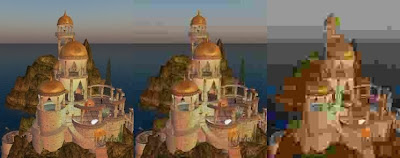
Image PixelationImages show how pixelation increases when file size is reduced

For most web purposes, however, image files of that order of size and quality are not necessary. What’s more, huge image files can occupy valuable resource space on the host site and cause unreasonably long upload or download times.

It’s often prudent to use some form of quality reduction. Adjusting the content of the image so that it gives a satisfactory display with a smaller file size is called optimisation, or optimising the image.

Most image hosting websites, including blogs and social network sites, optimise images automatically. If the images are satisfactorily optimised before uploading to the host site, it can save time, and in some instances be a cost saving too. Sue Waters’ excellent post on Uploading Photos From Digital Cameras Into Blog Posts gives great instruction on using several free packages for doing this.

Bitmapped images

The simplest way of arranging image information in a digital file is when each pixel carries its own information, as in a bitmap. This can be an inefficient way of packing image information, however, so bitmapped images tend to have larger file sizes than other image types of the same quality.

Compressed formats


JPEG, PNG or GIF type images use different systems of file compression. Pixel information that is duplicated, as can happen when the same colours are used over large areas of an image, is stored in a formula within the image file. The result is a smaller file size than that of the equivalent bitmapped file with the same image quality.


One advantage of the GIF compressed file type is that it can also include information on how separate image frames can be constructed. A special type of GIF file can display a cyclical series of frames like a looped movie – the so-called animated GIF.

Vector graphics

The introduction of vector graphic creation tools, such as Adobe Flash Writer, has brought new dimensions to image design and the way images can be displayed. Standard bitmapped images and related image types tend to break up, or pixelate, when enlarged on the screen.

What happens on display is that the information held in the image file is stretched over a larger area than was intended. The result is an image that appears to lose detail and sharpness and may look as if it is made up of chunks of colour, which is precisely how it is composed.

A vector image, on the other hand, does not lose its sharpness or detail when it is enlarged on the screen, simply
because there are no pixels in its image construction. True vector images tend to be limited to line diagrams and ones with solid areas of colour, however, and cannot be created from digital camera image files.

Ngā mihi nui – Best wishes

Friday, September 4, 2009

SPAM – A Blogger’s Nuisance

Tēnā koutou katoa – Greetings to you all
SPAM
How do you recognise comment spam?

Just over a year ago I started getting weird comments against a few blog posts. Not too frequently, perhaps one or two a month. Their occurrence was regular enough for me to consider using comment moderation. I didn’t switch it on as it happens, but the experience made the option very tempting.

The comments were not always posted on the most recent posts, which could have been a bit of a worry.

Luckily I enabled Comment Notification Email early on. This option in the blog settings is a splendid alert system.
It’s just as good to know when valid comments arrive as it is when bogus ones hit the fan.

Cut-throat approach

When I get comment spam, I usually just delete it there and then. It's a minor nuisance. But in recent months I’ve noticed these infrequent occurrences are becoming more sophisticated. I’d hate to delete a valid comment from a well meaning commenter.

These days, it takes me longer to work out whether it’s spam or just a comment with odd diction. Some of them can be almost appropriate to the post, though usually they come at the blog from left field.

Tell-tale signs

There are usually signs that indicate something is dodgy. One comment that I deleted recently, Nice blog and have lots of stuff here, actually linked to what appeared to be a valid and reputable environmental site. However, a search on Google, using the parenthesised comment as search criterion, returned 1740 hits.

That was telling!

Here’s an example of a recent comment I got against a post published in July last year:

    First time I have seen your blog and what a great post that was!Remember the saying “Genius is 99% perspiration and 1% inspiration”So once you have a great idea you have to work hard to turn it into a viable product that doesn’t just exist in your head. Keep blogging.

Plausible comment

At first reading, the comment makes some sort of sense, even with its idiosyncratic punctuation. But it linked to a commercial site, which is a tell-tale spam characteristic, rather than to a blogger’s account or about page.

Having jostled uneasily with comments like this over the past year,
I eventually developed a speedy strategy for putting them to test.

Perhaps you have a strategy of your own? Here’s my three point plan for nutting out an otherwise convincing spam comment –

    Does it make any sense that’s appropriate to the post it’s posted against?

    Does it link back to a valid blog or site that may be associated with a single person or valid group?

    How many hits do I get in Google when searching using the text of the comment or any parenthesised significant part of it?

The last point sometimes presents the need for closer inspection, despite a low number return. 15,00 hits is unequivocal, but if the number is less than 10, as it was with the otherwise convincing comment featured here, I have to inspect a few of the destinations listed in the search return.

Tracing the origins

At the time of posting, the search criterion, which was the first sentence from the suspicious comment, "First time I have seen your blog and what a great post that was”, returned only 9 hits.

But it becomes clear, when tracing their origins, that the comments are bogus – check them out.

I’d like to learn more about how others view this growing nuisance.

Are you a cut-throat deleter? Or do you have a sleuth-like strategy up your sleeve?
What checks on suspicious comments do you make before you delete them?

Ka kite anō – Catch ya later

Wednesday, August 19, 2009

Post to Post

Tēnā koutou katoa – Greetings to you all
Love Controversy
This week is proving to be busier that usual for me, with no time to catch my breath, or thoughts in posts, so it seems. I'd decided to catch up on my post reading, reduce the list on my RSS Reader and do some hard thinking rather than writing. But it doesn’t always work out that way, of course.

I end up commenting on posts on other blogs and writing more there than I would if I’d written a post. That’s how it’s been for me since the weekend.

Share

George Siemens’, Why Groups Fail To Share Information Effectively, was such a post that drew my comment. He picks up on the Psyblog article of the same name.

I recalled Tony Karrer’s post, Reduce Searching start Talking, that prompted my long reply in June, and also Michele Martin’s earlier discussions on homophily.

George’s enviably short post summarises a number of related ideas that get me thinking:
  • Failure of (group) interaction to take advantage of the value of critique and debate
  • sharing information that will not cause conflict or upset others
  • the need for a degree of self-confidence (and a supportive environment) to ensure contrary voices are heard
  • group pressure to normalize ideas.
At TCS we have been and are following a series of sessions of appreciative inquiry. These involve staff group discussions where shared ideas, once collated, are ostensibly contributing in some measure to the path of the current restructuring of the organisation.
In the light of all of the above, perhaps you can figure the way my mind’s working right now?

Free

Tony Karrer’s post, Free, picks up on Chris Anderson’s new book, Free: The Future of a Radical Price, and homes in on the idea that “we value atoms more than bits”.


Rutherford's lithium atomTony highlights the theme that content delivered as bits (online, etc) has less value than the equivalent atoms version (printed book, say).

He summarises a number of interesting key questions related to how consumers might contribute to the system and how the effectiveness of networks might best utilise the system.

It bothers me that bits are regarded as being less valuable than atoms
. I’d already discovered that within my own family, bits are encouraging time-debts that are unlikely to be repaid, in the form of stocks of never-to-be-viewed TV video recordings, not to say too much about the posts on my RSS Reader that I might never get round to reading – sigh.

Upcoming events


Some free elearning events are coming up, now and till the end of October. Perhaps you might like to contribute to these enriching, free webinars through bits of participation and sharing?

related posts - >> ( 2 ) ( 1 )

Ka kite anō – Catch ya later

Saturday, June 27, 2009

Frugality

Tēnā koutou katoa – Greetings to you allfrugality
Without frugality, none can be rich,
and with it very few would be poor.
- Samuel Johnson -

Last week the New Zealand Lotteries Commission handed out over $36,000,000 to the winning ticket held by a syndicate of four people. Before the draw, there was speculation in discussion on radio and television, on the Internet and elsewhere as to what the winners might do with the money during the rest of their lives.

Evidence on the life and history of past multimillion winners suggested that an amazingly large proportion of them managed to spend the lot within less than two years. The adage, “penny wise, pound foolish”, seems to ring true.

Frugal return?

I was brought up in the 50s and 60s. In those years I acquired education enough to understand what was meant by the ‘use-once-throw-away society’. I was a bit of a handyman in my teens. My mother called me Tinkerer. I took apart broken appliances that people had discarded, primarily to see how they’d worked and to establish why they didn’t.

If I managed to fix something, and curiously that happened on occasion, I usually gave it back to its previous owner. There were two reasons for this. One was that my mother disliked me hoarding ‘stuff’. The other was that often I got some small reward for my effort. I still possess an oddly hand-painted vase given to me 50 years ago by a grateful neighbour whose clock I'd mended.

Planned obsolescence?

There came a time when fixing things was more difficult. Clusters of individual components of manufactured goods were gradually replaced with sealed ‘black boxes’ hard to dismantle, difficult to repair and even more challenging to reassemble. They were key to the functionality of the contraption to which they belonged. Apparently they were selected to malfunction one after the other, with perhaps only a few weeks between each carefully planned event.

Replacing a ‘black box’ was unbelievably costly. Most faulty ‘black boxes’ ended up in the landfill still intimately connected to their associated appliances. When considering repair, buying a brand-new version of the appliance was often an attractive option in view of the expense-free term of use guaranteed to the owner.

As more of the componentry in gadgets became modularised, the day-to-day maintenance of the material world I lived in continued to become costlier. There came a need for greater incomes at a time of plenty, when meeting that need was moderately easy to achieve.

Environment of plenty?

Variety became a feature of the available range of manufactured goods. It was essential to meet the demand of every whim of fashion, style, functionality, design and cost. Just take a look at any stretch of motorway during the rush hour. Notice the plethora of brand, shape, size and colour of cars, burning their slow petroleum trails to their destinations.

Society has inherited a legacy – a way of life that’s going to be difficult to maintain. And there’s more. The discarded products of the bygone boom-times are already impinging on the environment of plenty, so the experts say. Embedded in that legacy-way-of-life are philosophies and cultures that are seemingly reflected in what we see on the Internet.

Where did efficiency go?

I tinkered around with computers in the early 80s. One of the golden rules I learnt while writing computer programs in basic, was to do with brevity and efficient use of code. A computer with a random access memory of 640 kilobytes was a luxurious acquisition in those days – and it wasn’t cheap.

Today I upload optimised pix
of about 4 Mb each from my digital camera, to an app in the clouds that I didn’t pay for, at least not directly.

We have hand-held devices that boast hundreds of gigabyte memory capacity accessed with a stroke of a finger. We’re told of the coming Graphene chip that promises 100 to 1000 times the speed and capacity of present-day microchips.

The last time I scoured cyberspace for data on the abundance of (free) web2.0 applications, I gathered handfuls of sites. Each of them boasted several dozen to a hundred links to web2.0 applications. Most recently, in my fevered attempt to find a single alternative to PhotoShop, I found dozens of free download offers for applications that claimed most if not all of the functionality I needed.

Time of plenty?

People everywhere celebrate a time of plenty. Most of us find comfort in abundance. In particular, we feel that limited choice is too restrictive,
a way of thinking that, for some, has been tuned by MS apps providing numerous different routes and methods to do exactly the same thing. The principle seems to be, ‘why offer a hundred ways to do something when you can offer it in a hundred and one?’

I wonder about this aspect of the culture that exists in western society. We know that we cannot continue to pursue the abundance that’s invariably presented, recognised, consumed and discarded. We know that continuing to do this returns a series of unwelcome consequences, some of which are
perhaps yet to be revealed.

Maybe we should give more thought to frugality?

pen
A Green Pen Society contribution

related posts - >> ( 2 ) ( 1 )

Ka kite anō – Catch ya later

Tuesday, May 19, 2009

The World's Knowledge Computable

Tēnā koutou katoa – Greetings to you allOpens a new window at http://www.wolframalpha.com/
Ever get irritated using your favourite browser? Are you often not able to find what you’re looking for? WolframAlpha could be your solution.

My son, Jack, kept me in the loop with this new development:
WolframAlpha a thoroughly intuitive machine that does more than just the thinking for you. Still in its infancy, WolframAlpha is a powerful computational engine as well as an intuitive tool - less content, more computational.

Stephen Downes describes it as not the sort of thing people will browse through, or even use as a search engine, but if you want the miscellanea formerly found in the World Almanac, this is your source.
Stephen Wolfram, scientist, inventor, author and business leader, created WolframAlpha to make the world’s knowledge computable.

Check out Stephen Wolfram’s introduction to WoflramAlpha.
It is impressive!

Or check out
WolframAlpha for yourself!

Ka kite anō – Catchya later

Thursday, April 30, 2009

A Giant Programmable Computer

Tēnā koutou katoa – Greetings to you all
Web Crystal Ball

"The web is becoming a giant programmable computer,

and that means that people can now collaborate.”
– Don Tapscott

In the year 2000, I was scouring the web for engaging sites to help me teach my online Science students, when I happened to get a hit on
The Periodic Table of Comic Books. This award winning site is a 20
th century mashup.

Link to The Periodic Table of Comic Books
It involves a close collaboration between the celebrated content sitting on the site at Web Elements in collaboration with the Chemistry Department of the University of Sheffield, UK, and a splendid 60s style comic book periodic table on the site at the Chemistry Department of the University of Kentucky. This amazing resource has not only engaging colour comic strips but also provides a full complement of data on each of the elements of the periodic table.

A giant programmable computer


When I listened to Don Tapscott’s lines about the web becoming a giant programmable computer in one of his recent video interviews,
I was reminded of Fred Brown’s famous Sci Fi short story, Answer.


The web is changing "the way that we innovate, the way that we orchestrate capability to create goods and services in society". It is "changing the deep structure and architecture of the corporation" and this is likely to bring about "profound changes to every institution in society".

I wondered if it would just be people who would collaborate though. Clearly, there is scope for much, where computational collaboration, far more than is already taking place, could become common.

Compelling style

Tapscott’s visionary manner is compelling. He comes across as a plausible sage. While I have no doubt about his observational skill and his business acumen, I wonder at the implied imbalance and the scale of some of his predicted web transformations.


He speaks of web changes, with most of his forecasts suggesting absolute transformations. “Social networking is becoming social production. This is no longer about hooking up online or creating a gardening community and putting videos on YouTube.” His tone suggests that these will become things of the past - they will simply not happen anymore.

He similarly describes it “changing from being a platform for the presentation of content to becoming a platform for computation”.

I doubt the totality of the web transformations that the pitch of Tapscott’s delivery suggests. There is plenty of space and scope for the web to be “a global platform for collaboration” as well as all the other uses it is likely to be put to and that will include cloud computing and all its developments. As long as humankind is confined to this earth, the capacity of the web to accommodate all of this and more is the nearest we’re ever likely to see of an infinite network.

Clearly there are transformations occurring in the nature of the web, and there always will be. While many of the new avenues that he describes are conceivable, I am sceptical of the exclusive nature of the things the web is supposed to become, according to Tapscott.


Ka kite anō – Catch ya later

Dwan Ev ceremoniously soldered the final connection with gold. The eyes of a dozen television cameras watched him and the subether bore throughout the universe a dozen pictures of what he was doing.

He straightened and nodded to Dwar Reyn, then moved to a position beside the switch that would complete the contact when he threw it. The switch that would connect, all at once, all of the monster computing machines of all the populated planets in the universe -- ninety-six billion planets -- into the supercircuit that would connect them all into one supercalculator, one cybernetics machine that would combine all the knowledge of all the galaxies.

Dwar Reyn spoke briefly to the watching and listening trillions. Then after a moment's silence he said, "Now, Dwar Ev."

Dwar Ev threw the switch. There was a mighty hum, the surge of power from ninety-six billion planets. Lights flashed and quieted along the miles-long panel.

Dwar Ev stepped back and drew a deep breath. "The honor of asking the first question is yours, Dwar Reyn."

"Thank you," said Dwar Reyn. "It shall be a question which no single cybernetics machine has been able to answer."

He turned to face the machine. "Is there a God?"

The mighty voice answered without hesitation, without the clicking of a single relay.

"Yes, now there is a God."


Sudden fear flashed on the face of Dwar Ev. He leaped to grab the switch.
A bolt of lightning from the cloudless sky struck him down and fused the switch shut.
Fredric Brown - 1954, Answer


Saturday, January 3, 2009

My Clean Up For 2009 – What Was Yours?

Tēnā koutou katoa – Greetings to you all
Broken Links Signs
It’s a Scottish tradition to tidy the home before New Year comes in.
At the end of last year, I decided to follow this tradition on my blog. Come Hogmanay, otherwise known as Auld Year’s Nicht in Scotland, I’d tidied up newmiddle-earth.blogspot.com.

  • I brought all my post-labels up to date and created new ones that were relevant to topics covered in each post.

  • I updated the alt attributes on each image tag and removed the link-to-image that’s automatically added when it's uploaded into Blogger. Some months ago, I started taking these measures with all new postings.

    I’d learnt that this provision was courtesy to the visually impaired who may choose to use a speaking browser - otherwise known as a screen reader (incidentally, I also removed Odiogo last year for I found it did not provide a significant advantage).


  • I checked links on all posts dated after 1 June 2008 to ensure that they were still active and relevant. There were some webs that had actually changed (their content was no longer relevant).

    I found alternatives for the few that were in this group. There were others that simply didn’t work any more. I either found alternative sites to link to or I removed the offending links.

I’m used to using a link-checker on my work web at TCS. Incidentally, the entire TCS site is down at the time I write this post and has been since before the New Year. Consequently, none of the links on several of my resources posts work at the moment. Sooner or later someone will rectify this at TCS and all will come right – I hope.

No apparent luxury:

I do not have the luxury of a link-checker for my site in Blogger. I use the ‘check links’ facility in DreamWeaver on my development web site at work, but I can’t run my blog site through it. I’ve searched Google several times over the months and not found any quick link-checkers for blog sites. Latterly, I began to wonder how other bloggers checked the links in their archived posts.

I have 131 posts dated 2008 on my blog. Most have at least one link to another site. It may be to a blog site or a web page. In a few more months, I’m going to have a sizable lot of posts to look after, and a corresponding set of links to maintain.

It’s dead Jim:

There is nothing I find more disappointing, when following a link on someone’s post that looks like an interesting lead, than getting the dreaded ERROR 404 or other such ‘Web-site Not Found’ notice.

Web links have a half-life. They don’t necessarily last forever. Some break altogether, which means the unfortunate reader goes nowhere on click. It could be that the linked site doesn’t exist anymore, or that it’s been relocated, with no provision for redirection.

It could also be that the site has gone down, and that the fault may be rectified in the near future. I’ve found it pays to wait a bit before revising a dead link if it’s to a site that I can trust.

There’s life Jim, but not as we know it:

Sometimes the content on a site changes. As a result, the site may no longer be relevant to the context of the link in my post. While this rarely happens with links to blog posts, it is not an uncommon problem where links to web pages are used.

The need for vigilance in this regard is paramount when web links are used in elearning modules. Though the performance of the links
on my blog is not as critical as this, it can be regarded by visitors as a reflection of my blog.

What is good practice?

When I find that links are faulty on my blog posts or web pages, I fix them by finding alternative relevant sites or remove the offending links in courtesy to my readers.

Am I being too fastidious in bringing old posts up to date? Does it really matter if old links don’t work anymore?

How do you check for broken links on your blog posts?

Ngā mihi nui – Best wishes

Saturday, December 27, 2008

Experience is reality

Tēnā koutou katoa – Greetings to you all
Globe of a New Zealand World
I have always believed that the imagination is closer to reality than reality itself. As a child, I looked up at the sky and saw things in the clouds that didn’t exist here on earth.

But as I grew into an adult, I became quite naive. The sky is reality. What I saw really does exist. But it is through my imagination that I can see things in cloud patterns that may not appear to be at my level here on the surface of the earth.

Giuliana Guazzaroni, on Verso 3.0, has posted a video that takes me back to my childhood. The strangely accented voice of the narrator brings a matter-of-factness, almost ho-hum-ness to an unfolding digital future.

Take a look for yourself at who you are - the prosumer.
Who will be the CEO of Prometeus?

Loosen the reins of your imagination;
sit back; peek at a snapshot of the 50 years span of time that we are in; identify where you might be in 10, 20 or 40 years; enjoy!

The Media Revolution


Ka kite anō – Catch ya later

Friday, December 19, 2008

Let Me Count The Ways

Kia ora tātou – Hello Everyone
A Bookcase on the Scrapheap
The book and the paper it’s made from have recently taken a rap. The suggestion is that the book is outmoded. It's well past its use-by date in education and it's not environmentally friendly.

I like the book. Having had a lifelong association with the invention,
I realise my opinion inclines in its favour.
To be fair to the book in the context of learning, however, the reasons gathered in support of its removal or replacement should be related to its merits and demerits as a learning resource.

When weighing the stresses, it is difficult to assess its effectiveness against digital counterparts unless a few ground rules are defined.


Judged by its cover

It is unfair to pitch the book against such things as an online chat or a wiki. Whatever the equivalents of these technologies will look like in future, their application and purpose cannot be compared, with any relevance, to those offered by a book. Try comparing the virtues of a submarine with those of a helicopter and you’ll see what I mean.

Neither is it fair to condemn the book just because its content may go out of date. Data in a web-page, a blog post or even a tweet are just as likely to go out of date, and for the same reasons, with no likelier promise of edits to correct these.

What are the benefits and drawbacks?

The rate of use of paper throughout the world is now higher than ever; it rages wildly and at a mounting pace. But it’s not the book, textbook, printed educational literature or school note-pad that is mainly to blame for the burgeoning rate of paper production. Advertising, and the wasteful packaging of goods, contribute to more than half the global consumption of paper.

More trees

This does not detract from the volume of paper consumed for educational purposes. It is huge. A recent article on campus sustainability and paper consumption by Clark University, reported that 720 trees are harvested each year to supply printer/copy paper for that establishment alone. It may be just a leaf in a tome, but I have an eye for conservation, and that fact leaves me pondering.

Burgeoning content

Sheryl Nussbaum-Beach states, in her September video, that by the year 2020, knowledge could be doubling every 72 hours.

She claims that by that time, there will be no place for the book in schools, as it would be impossible for it to keep pace with the rate of knowledge growth. Setting aside issues of relevance to the school curriculum, knowledge delivered at its predicted rate of creation by 2020 couldn’t possibly be accomplished in book form. I wonder if any data management system could ever deliver knowledge at such a rate - and for what purpose.

Pictures, images and diagrams

In the twentieth century, advances in the printing industry brought vibrant colour to illustrations in books. Only in the last 15 to 20 years has such quality of detail and colour been viewable on the computer screen.

The digital device has the edge on the book, with the use of diagrammatic sequence, melting images, moving images or other animated schema. Especially in student learning, there is a growing need for the use of visual images as learning tools to promote student understanding.

Videos in particular can provide amazingly detailed imagery. With the animation technology available today, it is possible to view a 3D virtual journey through the chambers of the human heart, or to observe the journey through the intake and exhaust valves of the internal combustion engine.

As David Whitehead said in his speech on strategies for improving literacy, simply asking students to imagine (as a thinking/learning tool) may not be as successful as it was in the past.

One might be forgiven for thinking that this may be as a result of the use of explicit animated imagery, rather than other teaching tools that are perhaps more likely to exercise the imagination of young minds. For as limited as a book may be in depicting complex concepts in pictures, its practiced use has the power to stimulate the imagination.

Visuals with text

When creating a learning resource, there is a tendency to overuse the features available to the digital resource designer. While acceptable and effective page design has become a well-established skill in textbook writing, the same cannot be said universally of digital learning resource design.

The misuse of PowerPoint as a learning tool highlights the vagaries of incorporating voice with text. Their joint use accompanying displayed images or diagrams in a learning resource causes cognitive overload in the learner. It is difficult to achieve this with a textbook. Verbal and written information simply cannot be presented simultaneously unless the teacher speaks while the learner is trying to read.

Copyright moves quick quick to music

One of the wonderful things about books is their ability to be shared.
A book, when first sold, can then be lent, gifted or sold again – the so-called first-sale doctrine.


But for the existence of that principle, libraries, second-hand book and CD stores, as well as video rental outlets would be illegal. Though there have been several attempts made over the decades to place restrictions on the resale of printed books, actions restricting the sharing of digital equivalents have moved more fiercely. It seems that even the publishers of printed resources may now wish to cash in on this idea.

It was suggested in The Future Of The Internet III that copyright protection technology may dominate content control in 2020. A little less than a third of expert opinion surveyed agreed that this was a likely scenario.

The tractable e-book

As I said at the start of this soliloquy, I like the book. But the thought of a digital replacement still excites me. I’ve yet to get my hands on an e-book, like the Amazon Kindle. As Jim Henderson says:

"For this to go, there has to be buy-in by the publishers."

Haere rā – Farewell

Tuesday, August 26, 2008

Prejudice and the Internet

Tēnā koutou katoa - Greetings to you all
Censored
New Zealand district court Judge David Harvey has ruled that the names of two young men, aged 21 and 23, charged with the recent murder of a 14 year old boy, are not to be published on the Internet.

Judge Harvey permitted the publication of their names and images on television news bulletins and in newspapers. He was reported to have said that he was “concerned about someone Googling someone's name and being able to access it later”, and was “concerned about the viral effect of digital publication”. This unusual and unprecedented decision is now before the New Zealand Law Commission.


Previously published

Judge Harvey recently published a text book on law and
the Internet entitled, Internet.law.nz, so the assumption is that he knows a thing or two about the issues involved here. Presumably he feels that publishing the names of those accused of murder on the Internet would be to the detriment of a fair trial.

Already there is much information widely spread over the Internet about this case. It must be very difficult for any crime release report about an impending trial not to cause people to jump to conclusions. For this and other reasons it’s often difficult for a jury to be assembled of people who do not know significant details about a case like this.

New Zealand law upholds that an accused is innocent until proven guilty. The ethical and humanitarian issues at play here are not slight. They pose interesting questions about the possible prejudicial use of the Internet in connection with an impending trial, while challenging the almost inevitable, but unlawful use of that medium for a purpose that the order prohibits.

Clearly, Judge Harvey’s decision has the potential to set a precedent for excluding the use of the Internet for publishing information about crime that otherwise might be distributed legally using any other publishing means.
Ka kite anō - Catch ya later

Tuesday, July 22, 2008

No Barriers to Elearning

Tēnā koutou katoa - Greetings to you all
Dolls in an arena
Barriers to learning are problems that have been in and out of the spotlight in education since before the beginning of this century. There's nothing new about these barriers. Frustrating reassessments of them are revisited regularly. In a selection of featured sites [1], [2], [3] on barriers to learning, there is a universal lack of reference to elearning. It is almost as if the nonappearance of any specific reference to that mode of learning is a silent acknowledgement that there are no barriers within it.

Any thought that elearning can provide a way through the charted and well known barriers to learning should be immediately applauded as showing insight and genuine vision. It's a wonderful way to look at things, it's the height of optimism and such confidence has to be admired. Anyone who suggests that elearning could be anything other than the true way to go about learning deserves the name Carmudgeon.

There are many barriers to elearning that appear to be ignored, however, often by the authorities purporting to address barriers to learning. Obvious and common barriers are to do with
lack of online capability, poor or lack of accessibility to a computer or the unavailability of necessary software. These very real situations often appear to be overlooked when programmes of learning are planned for distance-learners.

Add to cart

Elearning presents a whole range of new blocks that can be added to those barriers already in the cart. Most were previously identified as significant well before the advent of the present elearning drive. Barriers introduced by the hardware and software of the electronic interface between student and learning material have been acknowledged and recorded since online course delivery began. The advent of learning resources based exclusively on electronic means, or that require the use of electronic agencies, simply provide a new set of barriers to student learning.

If this is to be believed, then why is it that so many proponents of the method claim that elearning is the best thing to happen to education since sliced bread? Clearly there must be shades of grey. There must be learning topics that just seem to be made for elearning.

Animation a saviour

There is no doubt, and it has been proved, that animated diagrams are a saviour to learners in Biology, Physics, Chemical Thermodynamics and a whole raft of other heady topics where student access to understanding difficult concepts can be opened in ways that were not possible before. It has been shown that online communities really do work when it comes to putting learning through networking on the map. Do I believe there is a place for elearning? You bet I do, but . . .

Many learners who can write well are often at the seek-and-pick with one finger stage for a significant time during the initial stages when studying with a computer. Achieving proficiency in this often represents one necessary and extra step that must occur before topic learning begins. For many, unfortunately, it also represents a major barrier. It means that the aims associated with the programme of learning may not be achieved through that means. Digital participation that is free from significant obstacles relies so much on keyboard expertise, yet many students who frequently use the keyboard cannot touch-type.

Barrier to communication

The keyboard also presents a real barrier to student communication in special subject areas like Chemistry and Mathematics. Likewise in language learning, such as in Chinese and Japanese, as well as many other areas of learning, it is either impossible or extremely difficult to use the keyboard to write script or complex expressions and formulae. In many instances, one of the accompanying skills the student has to acquire is the use of a pen, for which the keyboard provides no easy substitute.

The interface and
required associated technical skills

Learning management systems require a level of technical competency that is not possessed by a significant proportion of learners. Depending on the requests from the teacher, a student may have to perform a range of technical activities, from
optimising an electronic file transferred from a digital camera or photo scanner, to depositing a data file in a 'digital drop box'. All of the individual tasks may seem simple enough. But it is rare that students can get through a day of learning without performing several combinations of technical tasks to do with the receipt, processing and return of their study assignments. Many students, especially the younger ones, are dependent on the competency and guidance of a parent, caregiver or supervisor to accomplish these.

Barriers in resource design

The design of elearning resources is extremely important, but it must be one that is suited to learning and not simply a design that's emerged from the craft of making the screen look good. Gina Minks has already highlighted the need for good design of Web 2.0 tools.

Many of the qualities of good page design
for educational print resources apply equally well to an elearning context. There is need for designers to discard the myth that text is a necessary evil, for the place of text in educational resources is as important today as it ever was. Relegating text to the background, a practice used by many Web 1.0 developers at the turn of the century, is simply not smart if the environment is to be of any use to learners. Paradigm shifts in elearning resource design should neither eschew the fundamental principles of good pedagogy, nor should they deny the need for necessary content, or iterative skills practice.

Barriers to assessment

While the move to elearning is undoubtedly innovative in what it affords the learner,
acquisition of elearning techniques are not necessarily helpful when it comes to assessment. Nearly all examinations require the student to read questions from the printed page and write their answers with a pen. The exclusive use of the screen and keyboard simply does not provide the necessary experience for a student to be adequately prepared for those assessments. What's more, skills that the student eventually acquires in using screen and keyboard are not universally useful for the entry of assessable material.

Clearly there's a long way to go for elearning to become the A B C of learning for many of our students.

( 10 ) ( 9 ) ( 8 ) ( 7 ) ( 6 ) ( 5 ) ( 4 ) ( 3 ) << - related posts - >> ( 1 )

Ka kite anō - Catch ya later