Showing posts with label change. Show all posts

Saturday, December 4, 2010

The Value of Instruction

Kia ora tātou – Hello EveryoneThe Value of Instruction
“A long time ago, in Newsday for November 15, 1994, Billy Tashman said with reference to a large, government-sponsored field test of different instructional approaches: ‘The good news is that after 26 years, nearly a billion dollars, and mountains of data, we now know which are the most effective instructional tools. The bad news is that the education world couldn’t care less.’
The same holds true today." James Kauffman

When I first began teaching, I bristled with the desire to instruct, inspire, coach, and enlighten. I’d just been through Moray House College of Education, Edinburgh, where my tutors and mentors truly recognised the worth of excellent instruction.

Yet for the past 30 years and more, I have felt like a disillusioned school teacher who is old fashioned, out of date and not really understanding what’s happening in education.


The other day, a good friend and colleague passed on to me a recent article from Teachers College Record, by James Kauffman. It was written as an introduction to his recently published book,

The Tragicomedy of Public Education:
Laughing and Crying Thinking and Fixing
.

As I read through Kauffman's article, I recalled how I felt when I read Shelley Gare’s book,

The Triumph of the Airheads and the Retreat from Common Sense.

I experienced déjà vu at every page.

James Kauffman is Professor Emeritus of Education at the University of Virginia in Charlottesville.

In his review article, entitled Reforming Public Education: A Tragicomedy, he explains how some people, working within education, fail to recognise the most important factor in improving learning:

“Truly ridiculous statements about reforming schools have been made by generally intelligent people who happen to botch thinking about education. Too often, their silly statements are taken seriously, making matters worse. Some would-be reformers ignore what produces most learning — instruction.”

Kauffman draws attention to all the areas of stupidity in education that I’ve complained about, for decades . . .

. . . about improving teaching:

“They might say we need better teachers without defining “better.” People aren’t necessarily better teachers because they’re smarter, know their subject better, or have taken more courses. We need standardized tests, but good teaching isn’t easily measured as “value added.” “Better teacher” doesn’t necessarily mean “higher average pupil gain score.” Good instruction is defined by what a teacher does.”

. . . about pursuing change without recognising what needs to change:

“On January 2, 2010, Kevin Huffman published in The Washington Post his heartfelt opinions about how to reform education, including suggestions that we recruit talented teachers and fire bad ones, base policies on student achievement, and get parents to demand what’s best for their children. He quotes a U.S. Senator from Colorado, who says that the education system must change, but he doesn’t say how. Any change will do? Sorry, Kevin and Senator, with all due respect, we don’t need just any kind of change. Unless it’s the right change, we’ll get nowhere.”

. . . about the
misunderstanding and misuse of statistics:

“One reason the “thinking” of so many earnest reformers is tragicomic when it’s taken seriously is that you can’t have all of the children (or teachers or any other group we measure) reaching any percentile higher than the first group any more than you can have all of the children (or teachers) above average.”

. . . about setting education goals that are absurdly unachievable:

“No Child Left Behind (. . .) set the goal of universal proficiency of students by 2014. That goal is a will-o’-the-wisp that anyone else who understands the most basic mathematical-statistical realities knows is impossible.”

. . . about teaching methods inappropriately applied to all learners:

“Direct, systematic instruction is more effective than other approaches like “discovery learning” (essentially, letting kids find out for themselves) and a lot of the other popular but failed ideas about teaching. Go to www.adihome.org/ to find out more.”

. . . about using test scores to judge success.

Kauffman lists his criteria for judging success:

  1. effective instruction,
  2. students’ engagement in productive activity,
  3. homogeneous grouping for instruction,
  4. positive emotional climate,
  5. clear school-wide expectations,
  6. positive support for desired behaviour,
  7. involvement of parents and communities.

Check out:

http://www.youtube.com/watch?v=GpAFlbncygM

The Tragicomedy of Public Education: Laughing and Crying Thinking and Fixing,
James M Kauffman, FULL Court Press, 2010
– ISBN 1-57861-682-4

The Tragicomedy of Public Education – DESK COPY


Ngā mihi nui – Best wishes

Friday, May 28, 2010

Where Has Education Gone?

Tēnā koutou katoa – Greetings to you all
The Skill Mastery HyperdomeThe Skill Mastery Hyperdome - SLENZ Project - Foundation Studies Build, Kowhai

Authentic learning is a solution to some of the problems
that arise in schools, workplaces and in society today.

Isn’t it funny that at a time when training is being heaved out of the workplace by a change of organisational thinking, it must find in-roads to secondary schools where, purportedly, it is desperately needed?

Last week, I attended the Te Aho o Te Kura Pounamu All-School Forum 2010. This was an international occasion for Te Kura.

Three Keynote speakers - Viv White from Australia, Elliot Washor from the United States and Stuart Middleton from New Zealand - gave their perspectives on ‘authentic learning’ in schools.


Stuart could not attend the Forum. He gave a recorded presentation outlining how he saw the history of what has happened globally to education in the past 50 or so years, and how those changes are impacting on what is happening to the youth in society today.

ROSLA

Clearly, the raising of the school leaving age, by several years, has brought about changes in how education is delivered. It has also altered how society looks on school-leavers who go about looking for jobs.


A number of associated changes have accompanied all this.
The origins and reasons for the changes are complex. But the situations for prospective employment of school-leavers are implicit.


Over 40 years ago it was acceptable for kids to leave school without having any formal qualification. There were plenty of jobs for them. They were trained and educated on-the-job, and stories of their successes in life are numerous. Education through ‘the university of life’ was not an uncommon occurrence. As well, night classes became very popular. These provided a useful adjunct to the education of that group of learners
.

But the gradual societal changes, brought about through the raising of the school-leaving age and the programs introduced to schools to cope with these, meant that jobs for inexperienced and unqualified youths became less and less plentiful. What’s more, the general calibre of those jobs is now of a lowly nature and night classes
are disappearing.

Hands on

Today there is a desperate need for kids who are likely to leave school early to be introduced to vocational possibilities during their remaining school years. It’s being recognised that preparation for the workplace in a hands-on manner and while kids are still attending school, is an effective way to accomplish this.

It so happens that the standards-based qualifications system adopted in New Zealand early this century was adapted from the trades schemes. Argue as you may, there is more training taking place in schools today than was delivered there 40 years ago.

It’s now recognised that the vocational access routes available for learners in schools are still not enough, a situation which is driving ‘authentic learning’ schemes into schools. I agree that more of this is now needed. I just wonder at what society is doing to education.

Knowing what to do

Education is supposed to be preparation for life. It has been said by many educators that “education is knowing what to do when you don’t know what to do”. When schools become geared to providing training for kids so that they can step into a job as soon as they leave school, isn’t there a possibility that ‘preparation for life’ will have to be diminished and/or postponed? When does that start if it has been displaced by the need for more immediate training in schools?


Where Has Education Gone?

Rangimārie - Peace In Harmony

Sunday, February 28, 2010

Progression, Proficiency and the Expert

Tēnā koutou katoa – Greetings to you all
New Versions
This week I was introduced to the beta version of an elearning application I thought I was familiar with and that I’d been using for the past 6 months. I’ve seen one minor upgrade in that time.

Beta is one of the stages of development in software release cycles when the application is made freely available to users, well before the general release date. This practice allows software developers to gather general feedback on design layout and functionality. It also assists with the detection and monitoring of otherwise unknown faults.

I prided myself on my competence in using the generally available interface (not the beta). I thought I was at least as capable using it as I am in using many other applications on my PC. But I felt like a newbie when I attempted to use the beta release, even when I appreciated that there were evident improvements compared to the accustomed version.

This scenario is not uncommon. I often find that my apparent expertise on a computer disappears. And it’s not failing memory either. It can happen overnight when a new application version is installed or a so-called upgrade is made.

Give and take

I concede there has to be a balance between the need for a more attractive interface to impress new users who may otherwise be put off with what may appear to be a less attractive interface, and the necessity for regular users, familiar with features and layout of an application, to be able to utilise the new environment with relative ease.

But experienced users have the knowledge of functionality and feature. Though they may not know where to find these on the latest version of an interface, they will know to look for them. I feel grateful when I have this knowledge.

When I go looking for a feature or function, the prior knowledge that such a feature or function exists in the old version spurs me on to keep looking for it. I always hope that it hasn’t been listed with other, perhaps unrelated options or features to do with a different functionality.

What's given

Take the introduction of Word 2007, for instance. My expertise with a word processing application literally became virtual when I began working with Word 2007. It took me several weeks of use before I felt reasonably comfortable using the menus on the new release.

Even now, there are some functions I know must exist in that application that I can’t find – even using the help menus. How do I know they exist? From my knowledge of feature and functionality my experienced use of past Word versions has given me, of course.

What’s more, I had to find out that the Word 2007 default .docx files that could then be created on my PC were unlikely to be readable by others when I sent them as attachments. So a whole functionality, new to me and many of my colleagues, had to be sidestepped in order to achieve necessary connectivity, despite that functionality being given in the default file type.

It’s one of the vagaries of change. Despite the best intentions, things will evolve that aren’t necessarily helpful or useful.

What's taken

In future, the watchword is concept not know-how. The future expert is one who can take forward the conceptual framework of ideas, features and functionality and look for their equivalents in new circumstances.

The successful future machine, application or interface is one that can mirror these ideas, features and functionality in a way that permits them to be found intuitively by the expert.

Ka kite anō – Catch ya later

Monday, February 1, 2010

Standards, Statistics and Steps Forward

Kia ora tātou – Hello Everyone
Roundabout in Jabberwocky
It looks like John Hattie’s words of wisdom may well have been said in vain. Implementation of the New Zealand National Standards for primary and intermediate school pupils starts today.

School boards and principals are not convinced that there is much to be gained by applying the standards. They have numerous reasons for their beliefs. Many school boards are planning to boycott their use, which would be illegal.

Nevertheless, government approval has been given for the campaign to persuade communities and school boards of the usefulness of the standards, at an estimated cost of $26,000,000NZ.

The pros and cons

I listen to the arguments that abound in the national news, buzzing with the debate between the parties in favour of using standards and those against. Some politicians who were originally in favour of the standards are now arguing against them. I’m amused at what I hear.

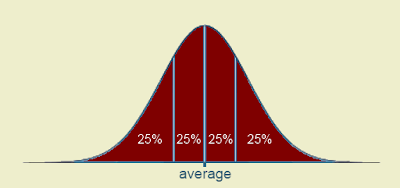
Here’s an example. There is argument of dismay expressed about the 25% of children in New Zealand who are well below average in literacy abilities, an average which was no doubt considered when setting the literacy standards in the first place. The argument is that the introduction of standards will help those in that well-below-average group.

I wonder if some of the contributors to that argument can understand what a distribution is, and the significance of an average based on that same distribution. Misguided use of statistics, even by authorities, is not unknown in disciplines other than education.

People statistics

In the late eighties, the Plunket movement was very enthusiastic, as it is today. Mothers with newborn children can choose to be visited by a Plunket nurse who administers advice when needed and who makes regular checks to record the development of children under their care.

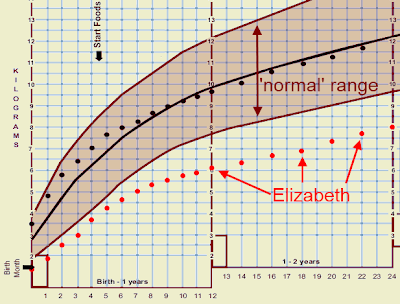
I knew a young family back then. Murray and Pauline who is a nurse, had a beautiful bouncing baby daughter. Both Pauline and her husband were petite people of delicate build and stature. At birth, Elizabeth was a small baby. The presiding doctors agreed she was normal for her birth weight. She was a healthy child who developed well in all respects.


Child Development Chart

One day I walked round to see the family only to find Pauline quite upset. She’d just had a visit from the Plunket nurse who’d said that Elizabeth was well below average in both size and weight. Pauline had been told that she should ensure Elizabeth was given the food required to lift her weight into the ‘normal’ range.

Pauline felt insulted and annoyed. Her reasoning was implicit. A petite newborn from parents of small stature would be expected to grow into a petite child, and subsequently mature to a petite adult. Over the years we found that was exactly what happened.

Furthermore, Elizabeth’s potential to maintain this has been with her since birth. It comes down to the difference between body size and body development. These measurable quantities are not the same.

The Plunket movement in New Zealand do a deal of good work in monitoring and caring for the health and welfare of the very young from birth. But the interpretation
of the growth chart by the nurse indicated that Elizabeth’s data was being clearly misunderstood.

Academic parallel

There is a parallel in the academic progress of children who are developing normally. That’s not to say that a child who is below what’s considered ‘average’ at an early age won’t continue to develop to have useful and perhaps even above average abilities in the future.


Bell Curve

But there is always going to be 25% of children who are well below average in literacy ability. Any standard based on what is expected of an ‘average’ child will indicate this when applied to a fair and random sampling from a nation’s children.

I applaud the arguments that are saying let’s improve the nation’s academic achievement through good teaching. Forget about assessment of the child at early stages as a comparison with what’s considered ‘average’. Let’s look towards progress and development in the child.

My hunch is that the introduction of standards will not bring about an understanding of what is good to look for in child development in literacy, numeracy or any other ability. Instead, it is likely to serve as a measuring stick for a whole range of things unrelated to child development.


Haere rā – Farewell

Friday, January 15, 2010

On the Hypotenuse

Tēnā koutou katoa – Greetings to you all
Pythagorean Squares
    The area of the square on the hypotenuse of any right-angle triangle
    is equal to the sum of the areas of the squares on the other sides.
    Pythagoras' Theorem

I was hopeless at Mathematics when I began High School. Teachers despaired at my ineptitude. But I had a natural interest in Science.

It was mainly due to good Scottish teaching, and a genuine willingness on my part to engage in learning, that I studied Mathematics to a level that let me reach the highest academic levels in Science.

It was also due in part to the curriculum I followed. I believe that it taught me how to think. It wasn’t that it taught me to think. I could do that. It taught me how to think, and to be able to think in specific ways.

In the 1970s, I taught High School Mathematics to senior level.

Recently, I have become familiar with fundamental changes in the way mathematical thinking is taught in High School in New Zealand.
I suspect that these are similar to changes in the Mathematics curricula in other western countries.

Get it right

The Euclidean proof of the useful Theorem of Pythagoras was one of the things I had to learn for my early qualifying examinations at High School. My mother learnt the same proof when she attended High School.

Euclid’s proof was taught in New Zealand schools until changes were made in the curriculum towards the end of last century (
20th). It is now supplanted by what I’d call a non-proof. What young minds are required to study about the Pythagorean Theorem in New Zealand today is certainly not a proof of it.

Euclid’s proof is based on the properties of rectangles and of triangles that are each of the same shape and size – as well as associated geometry ideas involving these shapes drawn between parallel lines. There are several hundred proofs of this fundamental theorem. Some are outlined in Wikipedia. A few I learnt at High School.

All of the proofs I learnt permitted me to understand, not only how the Pythagorean Theorem can be proved, but also what it is to know the significance of a universal proof. It is a way of thinking that permits a learner to appreciate that a proof needs to be watertight.

What does it prove?

Euclid’s proof can be applied to ANY right-angle triangle, not just a few special triangles. Therein is the difference between what used to be taught and what is now taught.

In High School today, a learner in Mathematics is instructed on how to show that a given right-angle triangle has the Pythagorean property. The instruction is not about any right-angle triangle, but applies only to a particular right-angle triangle that the learner draws.

Essentially, learners follow a recipe that shows that the Theorem may work for their triangle. It provides no real understanding of proof.

Here’s what they are instructed to do:


Counting Squares
Learners in Mathematics are shown how to draw a right-angle triangle on a grid, using simple mathematical drawing equipment. They are also shown how to draw squares on each of the three sides of the triangle. By counting the number of grid squares that make up each of the squares, they can show that the Theorem is followed approximately.

Higher thinking

While this recipe permits the learner to practice skills in using drawing equipment, it provides no understanding of a mathematical proof.
It does not even show conclusively that the Theorem works.
However carefully it is done, not every attempt at adding the squares will show that the Theorem is precise. Check out the squares shown above.

One can argue over the need for the knowledge of how to prove the Pythagorean Theorem. But the significant learning is nothing to do with that knowledge. The thinking skills learnt that permit the learner to understand what a watertight proof is all about are really what are far more useful and relevant to higher thinking skills.

This is the whole point of teaching the proof. It has the potential to permit the learner to realise the significance of a theorem that can be applied universally, and why it has this property. It is a way of thinking analytically that is not being taught today.


Ka kite anō – Catch ya later

Thursday, December 31, 2009

Elearning Prediction / Hope 2010 – Next 10 Years

Kia ora tātou – Hello EveryoneFuture City
My prediction and hope for 2010 are tempered by what I learnt and gathered in 2009 and before that. However, my hope does not match my prediction.

I suspect that what I hope happens will not come to pass.


I’ll not dwell on the particular. That is too narrow for the future. Instead, I’ll attempt to look to the bigger picture of where a Nirvana in elearning might lie.

Surmise


Commercialism and consumerism will rise with renewed vigour, despite the recent and global economic collapse that many experts say was brought about through, among other things, flagrant practices of commercialism and consumerism.

Rather than learn from past errors and misguided pathways, society will resume its hazardous journey and continue to career along a wavering and obstacle-strewn path to uncertain success.


Why do I feel this way? There are many reasons. I will cite only one elearning example here.

At the beginning of last decade (2000 – 2003) I watched the rise and fall of what might have been a brilliant concept in learning resource development – that of the learning object.

I may be wrong here – I don’t think I am. But my feeling is that financially pushy commercial factors, far larger than the budgets for learning itself, launched into the sky and eventually nosedived to destruction what could have been a worthwhile elearning concept, in the form of the learning object.


Pandora relic


I have one hope for this year and for the rest of time.

Sheryl McCoy’s recent post, Another Balkanized Technology Rip-Off, puts into words exactly how I feel about the way commercialism and consumerism have continued to hinder the betterment of society.


The drive to sell, through a strategy of planned obsolescence despite genuine need, continues to come in the way of establishing real expertise in the use of technology. It stymies creativity. It comes in the way of progressing to better things, while purporting to advance and progress towards improvement. It wastes time, resources and money.

I have worked through a decade of watching incompatibles, non-connectables, lack of connectivity and even incompatibility between different versions of the same commercial devices/applications/appliances.

I’ve wracked my senses, grappling with upgrades to versions of machines, computers and their applications. All in an attempt to continue to use these for the purposes that I had worked to acquire consummate ease in and reasonable expertise in.


What I discovered was that I was grounded, once again, when the latest version (of whatever) was released. It made me consider seriously and review any further dubious opportunities for ‘upgrading’.

Valuable opportunity

I hope that we can learn from the mistakes of the last decade, and of last century. Let’s not push mistakes into the past as history to be forgotten. Let’s not claim we are assured success by simply ‘moving right along’.

Let’s start putting to good use what can be salvaged in learning from our past mistakes and successes, and move to a richer and prosperous future.


Rangimārie - Peace in Harmony

Thursday, November 19, 2009

Change - A Possible Barrier to Progress

Tēnā koutou katoa – Greetings to you all

Roundabout in Jabberwocky

Change has come up a lot in the blogosphere recently.

Andrea Hernandez prompted me to write one of my post-type comments against her recent post on agents of change:


I thank her for the opportunity for that reflection. Part of my comment to her ran something like this:


Always, when I learn about change being brought about, I ask questions. I ask why we are changing and I listen. The reply I get allows me to decide whether the change that's proposed is something I'd support.

If I am confronted with the question, "Don't you support change?" my knee-jerk reaction is always to ask again, "What change or changes am I being asked to support?"

If I get back nothing but an argument on change, I become suspicious that the goal of the agent for change is simply to change, without recourse to why, how, or if a proposed change is for a real benefit.

There is always the possibility that change could mean a retrograde shift - moving back to what was - or moving to situations that are of no real benefit or worse. Yet it is always assumed that 'change' is good and that it means moving forward.

Why do I think like this?

Much of the change that I have been coerced into accepting in education over many years has not been thought through beforehand. It is only years, months or even weeks later, when in hindsight, it's seen that the enacted change was not needed, or was falsely initiated, or that there was a political agenda.


So it was for me with the introduction of unit standards to New Zealand secondary education in the mid-90s and with the introduction of NCEA this century.

When I heard of the proposed introduction of national standards to primary education in New Zealand, I experienced powerful déjà vu.
I had a dizzy sinking feeling, and something inside my head shouted, “Here we go again!”

When I hear John Hattie speak about the introduction of national standards, I think, “John! You’ve got it right mate!


Ka kite anō – Catch ya later

Thursday, November 5, 2009

Remember, Remember

Tēnā koutou katoa – Greetings to you allKallan in a cellarRemember, remember,
The 5th of November,
The gunpowder, treason and plot.
I see no reason
Why Gunpowder Treason
Should ever be forgot.

Tonight is Guy Fawkes Night in New Zealand – and it will be Guy Fawkes Night in several countries on this day – potentially a fun night for most children and adults.

The history of its origin has been well documented.

The scene is a cellar, directly underneath the House of Lords (Parliament) London, early in the morning of 5 November, 1605.

In a few hours, King James VI/I, the British Parliament and many dignitaries will be in attendance for the opening of Parliament. Having learnt of a rumour of a plot to blow up the Houses of Parliament, the King has ordered a check of the cellars to be executed this morning.

Guy (Guido) Fawkes is quietly leaving the cellar, having just completed his undertakings and last minute checks on dozens of barrels of gunpowder, laid all set to explode in a couple of hours. Fawkes is apprehended by the guards and the stockpile of gunpowder is discovered.

Further investigations reveal that Fawkes and several of his accomplices had attempted to destroy Parliament in what is now known as the Gunpowder Plot.

The outcome of the trial that ensued in January the following year brought Fawkes and his cohorts to the gallows. The King ordered that the event be celebrated by burning fires all over the kingdom.

And so a tradition began for a customary annual celebration.

What intrigues me is the fierce adherence to the Guy Fawkes tradition in New Zealand, a country that is now colonised by many nationalities. What is more intriguing is that a significant portion of people who celebrate ‘Guy Fawkes’ in that country have no knowledge of the origin of this almost pagan custom. Many simply refer to the celebration as Fireworks Night.

What is even more astonishing is that it’s nearly summer in New Zealand at this time of the year. Skyrockets and exploding firecrackers (or bangers) are already banned as they are a fire hazard. It’s not uncommon for dwellings (predominantly of wooden construction in NZ) to be burnt to the ground or large areas of bush and scrub to be razed over the ‘fireworks’ season. In its country of origin, Britain, the tradition takes place during winter when there is a low fire risk.

Legislation already restricts the sale of fireworks to a brief period in November. There have been several moves in recent years to ban the sale of fireworks for use at private celebrations in favour of public municipal firework displays.

My family watch the city display from our living room window. The whole sky is lit with pyrotechnics over a period of half an hour.

Interesting isn’t it, that the fun aspect of a bygone, almost forgotten celebration should so fiercely dictate how people choose to conduct themselves? For me, a shift to a suitable mid-winter date seems obvious as a first move towards safer fun for all.

Enjoy the fireworks!

Ka kite anō – Catch ya later

Friday, October 9, 2009

A School of the Future?

Tēnā koutou katoa – Greetings to you allImage of Honawan opens in same windowOpens New Window on SLURL
I believe that education in the future may not be best achieved in schools. However, this post summarises what I think should be the components of an ideal school of the future. It is not a summary of my idea of where education should be going, or how it should be obtained.

Tania Sheko is hosting the 'Green Pen Society' (GPS) writers' club over at Brave New World, for Paul Cornies at quoteflections.

Her topic for October is:

What would your ideal school look like?
Design the school of the future – but do it now!


How could I resist a topic like that?

Having taught in many different schools, and in different countries, I’ve gathered hunches, likes, dislikes and theories that can help me with ideas for the design of the ideal school of the future. It is a difficult task.

A secondary school

The ‘ideal school’ is forever a mythical artefact, for by definition a school has to meet the needs of many. No school can serve completely all learners all of the time.

As well, its situational constraints must necessarily govern the functions that it can deliver and needs to provide.

My ideal school would be a secondary school with a roll of learners from say, ages 12 to 18 years. It will prepare all learners for further learning. It will provide pathways to employment for those learners who, for whatever reason, leave the school to seek employment before having completed all available education levels within the school.

School providers and authorities

Assuming that the school is capable of serving all situational needs of its learners, the first requisite must be that it is affordable.

Fine education costs. We should all know that by now. If it results in overspending, however, then ultimately the future availability of good education within the school will suffer.

For as much as the ideal resources, pedagogies and learning environments are important, and to whatever specification these may adhere to, if they cannot be sustained, or are not seen to be sustainable by the providing authority, they cannot form the components of my ideal school.

Governance

My school will have experienced governance, administered by a necessary board of trustees who genuinely have the future situational needs of the learners at heart. To do this, the governance must have a vision for the big picture of what education should bring to learners in the 21
st century.

Management

Counterpart to governance, the school’s management will likewise have an eagerness to use such teaching structures within the school. There will be commitment to use resources, pedagogies and learning environments that foster teaching and learning that best suit the future needs of learners.

The whole picture

As boring as all of the above may seem, without them no ideal school will succeed. They are integral parts of the whole picture.

The school will have classrooms, workshops, laboratories, a library, recreational areas and halls as fit the needs of its composition. If at all possible, it will have a roll of about 550 learners. From experience this size appears to find the optimum fit when it comes to timetabling and managing resources and courses, especially for the senior learners within the school.

Allocation of classes should aim at an optimum size of 24 learners
and a ceiling of 28, with some flexibility within reason. This is an ideal school, so depending on the needs of individual learners there may be a call for smaller class sizes for some groups.

The best fit

I use the term ‘best fit’ on purpose here. Education is a complex thing.
I believe it is impossible to provide every factor that makes for good education, simply because of its complexity. Like other complex systems, however, it should be possible to make a best fit for ongoing situations, within and external to the school, that will be neither static nor exist in a state of equilibrium.

To this end, the learning resources provided in the school must also be capable of adapting rapidly to current changes. Methods used for delivering resources to teachers and learners must likewise be capable of evolving and adapting to suit emergent themes that will trace and follow the development of the immediate society.

A blended learning approach that best utilises the appropriate methods for teaching and learning to fit the learner and topic will be recognised by teachers and teacher management.

Elearning platforms

If an elearning platform must be established within the school, it should be open source. The expense of any commercial elearning platform can so easily preclude further development in platforms other than open source ones, so it is best to adopt open source from the beginning. This frees up finance, much needed within the school, for non-negotiable expenses and specific resources that may have no alternatives.

A stable, generic learner management system should embrace any learning content management system chosen to meet the needs of the school’s resource requirements. Too easily, the maintenance expenses on such systems can get out of hand, ending up like the tail wagging the dog. This is why good governance working closely with good management within the school is so important.

I’m talking in ideal big picture stuff here and purposely not mentioning commercial brands of hardware or software. A school that’s capable of adapting through emerging requirements should not be tied to any specific commercial provider or commodity brand.

And this brings me to a conclusion. The ideal school will need to be mobile, as the movement of a flock of birds. It will shift with the elements, yet remain intact as it moves bodily to meet the varying needs of the ever-changing learners within it.


pen
A Green Pen Society contribution

Ka kite anō – Catch ya later

Saturday, June 27, 2009

Frugality

Tēnā koutou katoa – Greetings to you allfrugality
Without frugality, none can be rich,
and with it very few would be poor.
- Samuel Johnson -

Last week the New Zealand Lotteries Commission handed out over $36,000,000 to the winning ticket held by a syndicate of four people. Before the draw, there was speculation in discussion on radio and television, on the Internet and elsewhere as to what the winners might do with the money during the rest of their lives.

Evidence on the life and history of past multimillion winners suggested that an amazingly large proportion of them managed to spend the lot within less than two years. The adage, “penny wise, pound foolish”, seems to ring true.

Frugal return?

I was brought up in the 50s and 60s. In those years I acquired education enough to understand what was meant by the ‘use-once-throw-away society’. I was a bit of a handyman in my teens. My mother called me Tinkerer. I took apart broken appliances that people had discarded, primarily to see how they’d worked and to establish why they didn’t.

If I managed to fix something, and curiously that happened on occasion, I usually gave it back to its previous owner. There were two reasons for this. One was that my mother disliked me hoarding ‘stuff’. The other was that often I got some small reward for my effort. I still possess an oddly hand-painted vase given to me 50 years ago by a grateful neighbour whose clock I'd mended.

Planned obsolescence?

There came a time when fixing things was more difficult. Clusters of individual components of manufactured goods were gradually replaced with sealed ‘black boxes’ hard to dismantle, difficult to repair and even more challenging to reassemble. They were key to the functionality of the contraption to which they belonged. Apparently they were selected to malfunction one after the other, with perhaps only a few weeks between each carefully planned event.

Replacing a ‘black box’ was unbelievably costly. Most faulty ‘black boxes’ ended up in the landfill still intimately connected to their associated appliances. When considering repair, buying a brand-new version of the appliance was often an attractive option in view of the expense-free term of use guaranteed to the owner.

As more of the componentry in gadgets became modularised, the day-to-day maintenance of the material world I lived in continued to become costlier. There came a need for greater incomes at a time of plenty, when meeting that need was moderately easy to achieve.

Environment of plenty?

Variety became a feature of the available range of manufactured goods. It was essential to meet the demand of every whim of fashion, style, functionality, design and cost. Just take a look at any stretch of motorway during the rush hour. Notice the plethora of brand, shape, size and colour of cars, burning their slow petroleum trails to their destinations.

Society has inherited a legacy – a way of life that’s going to be difficult to maintain. And there’s more. The discarded products of the bygone boom-times are already impinging on the environment of plenty, so the experts say. Embedded in that legacy-way-of-life are philosophies and cultures that are seemingly reflected in what we see on the Internet.

Where did efficiency go?

I tinkered around with computers in the early 80s. One of the golden rules I learnt while writing computer programs in basic, was to do with brevity and efficient use of code. A computer with a random access memory of 640 kilobytes was a luxurious acquisition in those days – and it wasn’t cheap.

Today I upload optimised pix
of about 4 Mb each from my digital camera, to an app in the clouds that I didn’t pay for, at least not directly.

We have hand-held devices that boast hundreds of gigabyte memory capacity accessed with a stroke of a finger. We’re told of the coming Graphene chip that promises 100 to 1000 times the speed and capacity of present-day microchips.

The last time I scoured cyberspace for data on the abundance of (free) web2.0 applications, I gathered handfuls of sites. Each of them boasted several dozen to a hundred links to web2.0 applications. Most recently, in my fevered attempt to find a single alternative to PhotoShop, I found dozens of free download offers for applications that claimed most if not all of the functionality I needed.

Time of plenty?

People everywhere celebrate a time of plenty. Most of us find comfort in abundance. In particular, we feel that limited choice is too restrictive,
a way of thinking that, for some, has been tuned by MS apps providing numerous different routes and methods to do exactly the same thing. The principle seems to be, ‘why offer a hundred ways to do something when you can offer it in a hundred and one?’

I wonder about this aspect of the culture that exists in western society. We know that we cannot continue to pursue the abundance that’s invariably presented, recognised, consumed and discarded. We know that continuing to do this returns a series of unwelcome consequences, some of which are
perhaps yet to be revealed.

Maybe we should give more thought to frugality?

pen
A Green Pen Society contribution

related posts - >> ( 2 ) ( 1 )

Ka kite anō – Catch ya later

Saturday, June 6, 2009

Where My Time Is Spent

Kia ora tātou – Hello EveryoneClock face on The Big Question
This month’s Big Question on The Learning Circuits Blog is
where is your time spent?” It paraphrases this in a series of more specific questions that saved me time in thinking up sub-headings for the sections in this post.

Where do I spend my time?

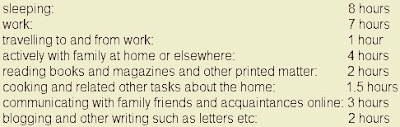
I think a more important question here is ‘when and how do I spend my time?' However, here’s the 'where', per day, based on normal weekday activities averaged over a 7 day period, not including holidays:

Chart of time spent
As you can see, I have a 28+ hour day. Short of pitching the world off its orbital path to accommodate all this, obviously there has to be some overlap. Indeed, to be realistic, this is what I find – not multi-tasking
but the ‘where’ tends to dictate this more than the ‘when and how’. When and how I spend my time is another matter.

How do I find time for all the relatively newer things
like reading blogs, twitter, social networks, etc?


In 2001, I discovered some useful things about myself. I learned more about when the best time is for me to think and reflect. I discovered that the early hours of the day was a good time to reflect on the day yet to come, and do some planning for that. The best and most convenient time for this is when travelling to work by bus.

For me this – together with its more relaxed counterpart, that of travelling home on the bus – provides an efficient use of otherwise wasted time. So it does two things. It gets me to and from work. It also helps me with the efficient use of my time at work and at home.

I might plan a strategy for tackling a ticklish problem at work to do with my learning group, for instance. Or I might have a bright idea for a blog post and have the time to think through different ways that it could be done. In fact, most of my initial thinking is done on the bus or at times like that where I've no option but to be there.

Good planning, of course, has to be flexible. When things don’t go to plan, a new plan must be drafted or the old one reshaped. Here’s when contingencies can also be mulled over while still in the planning stages – another efficiency trick. That way, not so much time has to be spent rethinking the one-and-only, platinum-plated, carbon-nano-tube-reinforced plan.

What am I doing less of today
than I was 3-5 years ago?


I don’t write so many letters. I spend more time writing equivalent emails and social networking to cover the same reasons for writing letters. With my older daughter, Hannah, at university and living in another city, I now spend time communicating with her through txting and Facebook and on the telephone.

This weekend, for instance, I took some photographs of my youngest daughter, Catriona, with my Sony digital. She was all set to be off to a Saturday night fancy dress party. I just had to catch a few pix of her.

Today (Sunday) I spent some time trimming the photographs and uploading them to Flickr and Facebook while chatting with Hannah online. This is one of the overlaps, in this case an overlap of family time spent with social networking and using digital technology.

Do I have less of a life with
all of these new things?


Most certainly and categorically not. In 2007 and at the age of 60, I had a hip joint replaced. That was in August. In October, my family whisked me off to Auckland to spend a weekend with them. I’d got rid of my sticks by that time and was able to hold a digital camera steadily enough to nearly fill 2 Gb of upload.

When I got home on the Sunday night I uploaded the digital pix to Facebook and used these in communication with family overseas.

Similarly in December that same year, when I was still inebriated with my new mobility, I took Catriona across the harbour on a ferry to explore Matiu-Somes Island. Once again, the digitals provided an incentive to blend relaxation with family and a bit of web2.0 technology.


The joy of the immediacy in using today’s technologies – my chat with Hannah while uploading pictures taken the night before – the rapid return to communicate pix taken on holiday immediately with family overseas – the fun of previewing pix that were taken on Matiu-Somes Island while returning on the ferry – do not detract from life.

At the NetSafe Conference July 2008 I stepped out to the shore of Lake Wakatipu at morning tea. I had my camera in my pocket and I captured a scene that has brought back memories of the short time spent at the lakeside. The playback is on Facebook and has been appreciated by family and friends alike.


But there are many moments of tranquillity that I have spent with others or in solitude without the accompaniment of technology - I am guilty of this. In those times I either leave the technology (digital cam – mobile phone) at home or in my pocket, switched off. I make the choice.

Haere rā – Farewell

Saturday, May 16, 2009

Hiv U evr wundird wot it wiz lyk B4 dikshinariz?

Hiv U evr wundird wot it wiz lyk B4 dikshinariz? Wen da wurdz wiz spelt NA way U lyk? An ya cud spel wurds difrint onda sem payj an nobdy nyu ye cdnt spel? Sumtyms a git emale letirs frm da kidis in skule an dey ryt lyk dis. Sumtyms i git txts frm da kidis onda cell an dey txt jis lyk dis. Its frendly cos dey txt jis lyk dey tok. Sumtyms i repli da sem wey an i gits a frendly txt back.
Das kyewl. Dat makes me feel wun o dey kiddis. Das kyewl 2.

So what’s with txt language? I notice that the e in ‘text’ is now dropped when referring to txting on a mobile, even in formal texts. The word is nearly new and is appropriate.

I sit close to several teachers of English in the office at work. They are cool people and although some are boomers like me, they all agree that language and how we write it is evolving all the time.

I have a special interest in language. It is so relevant to thinking and learning in a subject. It’s the bricks and mortar of being able to think.

When I was very young my reading and writing was atrocious - I’d no chance of spelling that word correctly either. My spelling was shoking. My mother, who was concerned about her son’s literacy, tried valiantly to entice me to read. She bought me novels. I read some but not much. I preferred to read comics. My mother disapproved of comics.

My grandmother, who was experienced and knew what her grandchild liked, would secrete a bundle of comics under the bedspread in my room for me to enjoy. She knew the worth of comics. She knew that ANY reading was better than none. She knew that it was the mind that needed the skill to lift the letters and words off the page and understand - that it didn’t matter if it wasn’t approved high school reading.

My reading skill was improved by me reading comics. Eventually I graduated to reading short stories and novels
and hundreds of books on Science for that was my interest.Hannah reading at the age of 5

Bo
oks have always been a part of my life since then. Linda and I read books, and our house is often a mess with them. Both our daughter's are avid readers.

My daughter Catriona, barely 3 years old and well before she could read, would take her favourite book down from the shelves in the hall.

She would sit and turn the pages. Sometimes she would sniff them. Sometimes she’d hold the book upside down when pretending to read it, for there were no pictures. That didn’t avert her fascination. It was one of my little books of poetry, the smallest book on the shelves. Catriona identified it as her book because of its tiny size. She never tore a page and always returned it to the shelf when she was finished playing with it.

When our children were both primary school age, our living room floor was always littered. In our house you could take your life in your hands by trying to walk across the living room floor in the dark. It was always littered - with books.

When Catriona was older, I would sometimes find her reading under the blankets with a torch when she was really supposed to be asleep. I just left her to it. She’s 15 now and has read every Harry Potter book published, some of them twice.

She has also read Tolkien’s Lord Of The Rings trilogy. I've seen the movies, but I've never read the Lord Of The Rings books. I found them hard to read.

Catriona uses txt language on her mobile all the time, yet she writes in near perfect English when she does her assignments for school. Her spelling’s not bad either. There’s a lesson to be learnt here
.

Ka kite anō – Catch ya later

Sunday, March 15, 2009

All Change with Vista

Kia ora tātou – Hello Everyone
I’ve just set up our new computer. Hooray! It’s taken me most of my spare time yesterday and a good few hours today sorting out Net connections (again), getting email started, setting up Firefox, sorting set-ups etc – and there’s still a bit to get done, and how.

I’m really pleased with the replacement. We had a rather world weary PC with Windows 2000 on it with an equally world weary 13 inch CRT monitor. I must say that we were nevertheless grateful for the machine, a gift from my son, and the good service it gave to the family over the years - it has done its dash.

Shiny new machine:


But now we have a brand new HP 2 Duo CPU E4700 @ 2.60 GHz with a 19 inch LCD. The family think it’s rather swish, and I must admit that, apart from the extremely tinny audio from the screen (which can be easily rectified with some decent speakers) it all has a good feel to it. Fast as, I can get writing a blog post within 30 seconds of switching it on. I just love the automatic spell checking when writing a post or comment.

With the help of a good friend, I have been using Winternals to lift some of the files off our dead machine. Images are all fine. Word files – no problem. Even a few old educational games (.exe files) that my daughters still enjoy, carried across and work well, including some of Grey Olltwit’s brilliant creations, such as the complete works of William Shakespeare in an easy to use search and find suite.

Cut the losses:


There are a few losses though. I can’t retrieve the PhotoShop software, which is to be expected, as well as some other proprietary software including PowerPoint. Nothing to complain about there. I'll miss the PhotoShop until I can get it replaced.

But the software packages that we had on CD and that should have been useful cannot be installed or run on Vista. These include a suite of SIMS, and Sid Meier’s Civilization III. All the software was gifted by my son as it happens.

UPDATE 11 April: I have since located dll files that are absent in Vista and that are required for several installations to function as well as an extraordinary fix on CIV III involving an unwanted file to do with fonts of all things. We now have CIV III installed and running on Vista.

The Outlook pst files that are intact and carry our archived email, though transferable, cannot be accessed on the new machine. They remain 150 Mb of impenetrable, inaccessible data. It appears that such files die with the machine, for even if our old machine was still operable there is little that can be done to transfer the emails across in any useful form, other than by taking text dumps of the individual files.

Considering the need for fortitude and resourcefulness in these days of a strained global economy, I can’t help feeling that there are several lessons to be learnt here.

When I’ve completed the retrieval of all that can be salvaged from our old PC, I shall take great care to ensure that, dead though it may be, it is appropriately recycled along with its twentieth century monitor. I'm into green computing.

Ka kite anō – Catch ya later

Thursday, February 5, 2009

The Collective Effect

Tēnā koutou katoa – Greetings to you allA Huge Crowd
Why should our principles, beliefs, creeds, raison d'être as trainers and educators, be dislocated because of a global financial crisis? It seems illogical that just because things have got tough financially, even on a global scale, our fundamental ideologies as educators should have to be reviewed and turned around.

Is it logic?

We do not rush to review our theories of Mathematics, or of Science, or of Computer Logic Theory, just because we can’t afford to buy the software. So why should pedagogy and training theory be any different? Yet this is the sort of so-called logic that I’m reading about and listening to, that’s being touted on the Net - right now.

It seems that, because of our global financial situation, we should rethink all that we've done in the past about teaching, training and learning. It beggars logic.

A possible genetic throwback:

I begin to think that, perhaps, this is a genetic throwback. Maybe, way back in time, when crisis struck our primitive ancestors, some of them began to behave erratically, even stupidly. For some chance reason, the genetic strain that was shared by those demented individuals survived, and was passed on to some of us who are here today. Could this be what happened?

I muse over so-called mass-hysteria – a strange and insanely illogical behaviour of people in large groups, who experience unusual, synchronous, emotional events. I wonder how much of what we are witnessing is as a result of the so-called bandwagon effect.

If we can have collective intelligence,
why can’t we have collective stupidity?

Ka kite anō – Catch ya later