Showing posts with label assessment. Show all posts

Thursday, April 29, 2010

What Are Teachers For?

Tēnā koutou katoa - Greetings to you all
What Are Teachers For
I have heard it said that teachers are assessors and that assessment is part of the teaching and learning process. I often wonder if the meaning of the word ‘assessment’ is sometimes stretched and perhaps misused in contexts to do with learning.

Standard assessment

At the moment, NCEA standards are of two types. There are Unit Standards, awarded to learners who meet all component criteria for a particular standard. There are also Achievement Standards, awarded as Achieved (just a pass), Merit and Excellence.

Re-assessment

A learner, who does not meet the criteria for a unit standard or for an award in an achievement standard, can choose to be re-assessed after a period of re-teaching and further study.

My thinking has never been aligned with the philosophy of teaching to a standard. I don’t believe that’s what ‘education’ is about. However, as a teacher, I have no choice but to accept the assessment system that is now intimately bound with secondary education in New Zealand.

At least re-assessment permits the learner to revisit the learning and allows the teacher to do some more teaching.

Re-submission

NZQA is reviewing, again, the process of assessing learners for NCEA standards in New Zealand. The specific issue that I bring to this post is the matter of what’s called a re-submission. I’ll explain.

When a learner completes and submits a standard assessment test, and it is not clear to the assessor whether the learner has actually met the standard, the test script can be returned to the learner for amendments to be made. These are performed by the learner under test conditions before re-submitting the test script for the assessment to proceed. This process is called re-submission.

Furthermore, during re-submission the learner is not permitted to study on the topic, nor receive any teaching, coaching or advice associated with the standard, before revisiting assessment tasks they performed in the test script. They are only permitted to consider their answers and perhaps amend them.

There have been many debates by teachers about what constitutes a case for re-submission. Performing a re-submission is quite different from entering into a phase of re-teaching followed by re-assessment. Teachers like things to be cut and dry. So many discussions at the moment centre on the criteria for re-submission.

A disservice to learning

As a teacher who is more interested in what learners learn and how they learn, than what they achieve in a standard test, I am often in a bind over the issue of re-submission.

I feel that I’m doing learning a disservice if I do not permit (and cannot permit) learners to revisit the learning. This is precisely what happens, and must happen according to the rules for standard assessment, when re-submissions are permitted for learners who are very close to meeting criteria for a particular standard.

In such instances, I start wondering what my role is as a teacher and educator. I also wonder if I am doing learners a disservice by permitting them to re-submit their test evidence without any further teaching and learning taking place.

I feel that if learners are in need of more teaching and learning, then they should be given the opportunity to receive just that. This opportunity is denied learners who gain a standard on re-submission.


What are teachers for?

Ka kite anō - Catchya later

Wednesday, February 17, 2010

Using Elearning Resources and All That Gear

Tēnā koutou katoa – Greetings to you all

This week I submitted my plans for three Science learning resources that I will be writing this year. The expectation is that the drafts will have an online component.

I say drafts, for when the resources are built and accessible to the learner, the intention is to amend and refine them, as part of an ongoing process, dependent on analysed feedback from the learner.

Each resource set will provide teaching and learning material for a learner to achieve an associated NCEA Level 1 Science standard.

There will be no formal question-and-answer written tests for these.
All of them include reporting of a sort – a way that learners can show their communication skills – as well as demonstrating their knowledge and understanding of the various aspects of Level 1 Science.

Learning and assessment

I was heartened by Britt Watwood’s response to my last post on elearning and pedagogy.

He kindly included a link to the Virginia Commonwealth University Online Teaching and Learning Resources Guide, which I read. It was a joy to see the inclusion of the terms formative assessment and summative assessment, with appropriate links given so that their use is unequivocal.

Summative assessment will take the form of teacher assessment, driven according to assessment schemes written against the NCEA Level 1 Science standards. But the formative assessment that has to occur before that will consist of an assortment of methods including:

  • self-marked booklet study
  • computer assessed interactive activities
  • teacher feedback
  • creating and maintaining learner engagement.

For those who are unfamiliar with the term, formative assessment is a means used by a learner to reflect on what’s been learnt and understood. A course of action may be followed to do further learning if required.

Formative assessment can involve a teacher who provides feedback to the learner. It takes the form of automatic computer feedback in interactive elearning resources. Or it can be a checklist of answers or explained processes to supplementary examples given in a printed resource book.

A rudimentary example of formative assessment is a list of answers to clues in a crossword puzzle.

Down to Earth


One of the standards involves investigating an astronomical or Earth science event. When writing my draft resource for this standard, I will be pulling on all appropriate techniques in elearning that are available to me and my cohort of learners:


I will keep in mind the usefulness of games-based learning and will try to remember all that’s considered to be elearning myth.


Ka kite anō – Catch ya later

Monday, February 1, 2010

Standards, Statistics and Steps Forward

Kia ora tātou – Hello Everyone
Roundabout in Jabberwocky
It looks like John Hattie’s words of wisdom may well have been said in vain. Implementation of the New Zealand National Standards for primary and intermediate school pupils starts today.

School boards and principals are not convinced that there is much to be gained by applying the standards. They have numerous reasons for their beliefs. Many school boards are planning to boycott their use, which would be illegal.

Nevertheless, government approval has been given for the campaign to persuade communities and school boards of the usefulness of the standards, at an estimated cost of $26,000,000NZ.

The pros and cons

I listen to the arguments that abound in the national news, buzzing with the debate between the parties in favour of using standards and those against. Some politicians who were originally in favour of the standards are now arguing against them. I’m amused at what I hear.

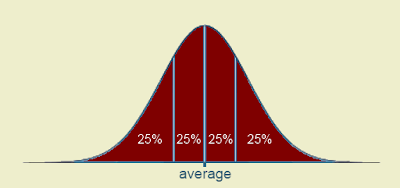
Here’s an example. There is argument of dismay expressed about the 25% of children in New Zealand who are well below average in literacy abilities, an average which was no doubt considered when setting the literacy standards in the first place. The argument is that the introduction of standards will help those in that well-below-average group.

I wonder if some of the contributors to that argument can understand what a distribution is, and the significance of an average based on that same distribution. Misguided use of statistics, even by authorities, is not unknown in disciplines other than education.

People statistics

In the late eighties, the Plunket movement was very enthusiastic, as it is today. Mothers with newborn children can choose to be visited by a Plunket nurse who administers advice when needed and who makes regular checks to record the development of children under their care.

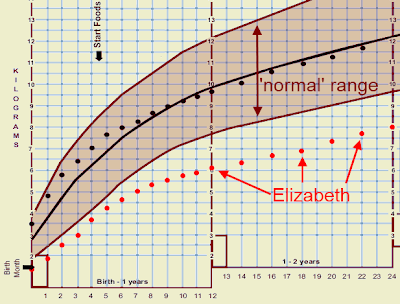
I knew a young family back then. Murray and Pauline who is a nurse, had a beautiful bouncing baby daughter. Both Pauline and her husband were petite people of delicate build and stature. At birth, Elizabeth was a small baby. The presiding doctors agreed she was normal for her birth weight. She was a healthy child who developed well in all respects.


Child Development Chart

One day I walked round to see the family only to find Pauline quite upset. She’d just had a visit from the Plunket nurse who’d said that Elizabeth was well below average in both size and weight. Pauline had been told that she should ensure Elizabeth was given the food required to lift her weight into the ‘normal’ range.

Pauline felt insulted and annoyed. Her reasoning was implicit. A petite newborn from parents of small stature would be expected to grow into a petite child, and subsequently mature to a petite adult. Over the years we found that was exactly what happened.

Furthermore, Elizabeth’s potential to maintain this has been with her since birth. It comes down to the difference between body size and body development. These measurable quantities are not the same.

The Plunket movement in New Zealand do a deal of good work in monitoring and caring for the health and welfare of the very young from birth. But the interpretation
of the growth chart by the nurse indicated that Elizabeth’s data was being clearly misunderstood.

Academic parallel

There is a parallel in the academic progress of children who are developing normally. That’s not to say that a child who is below what’s considered ‘average’ at an early age won’t continue to develop to have useful and perhaps even above average abilities in the future.


Bell Curve

But there is always going to be 25% of children who are well below average in literacy ability. Any standard based on what is expected of an ‘average’ child will indicate this when applied to a fair and random sampling from a nation’s children.

I applaud the arguments that are saying let’s improve the nation’s academic achievement through good teaching. Forget about assessment of the child at early stages as a comparison with what’s considered ‘average’. Let’s look towards progress and development in the child.

My hunch is that the introduction of standards will not bring about an understanding of what is good to look for in child development in literacy, numeracy or any other ability. Instead, it is likely to serve as a measuring stick for a whole range of things unrelated to child development.


Haere rā – Farewell

Wednesday, November 25, 2009

Assumption

Tēnā koutou katoa – Greetings to you allAssumption
Some say I have a chip on my shoulder about education.

At 9 years old, I returned to Scotland with my parents, having spent almost 2 years in Nyasaland (now Malawi). While in Africa, I was home-schooled for almost a year. I then attended St Andrew’s Primary School, in the Capital City of Blantyre, for the remainder of my stay.

I had no education in the traditional sense during the months-long journeys to and from Nyasaland on Union-Castle liners. The unusual long routes round the Cape of Good Hope, were taken at the time of the Suez Crisis when access through the Suez Canal was unsafe.

My childhood experience of living in Africa was an enriching one, but my traditional education fell sadly behind. When I re-enrolled at Dunfermline Commercial Primary School in Scotland, I sat beside the classmates that I’d been with over two years before.

They were all so far ahead of me by that time. I had real difficulty catching up. My schoolroom behaviour took a turn for the worst.

I was soon to be classified as a boy much
in need of counseling, and was made to attend a series of Tuesday afternoons with Mrs Len, a child guidance counselor.

My visits consisted of sessions of being helped through tests, mainly so-called association tests and intelligence assessment, presumably to determine my state of mental health and my ability.

A beautiful glen

I recall one session in particular. Mrs Len began by asking what I did on Saturdays. I explained that I spent fine-weather days down the beautiful Glen in Dunfermline. I loved the Glen and would have spent every Saturday and most Sundays there if I could.

“Why don’t you go to the films on Saturday mornings?” was her response to my story. “That’s what lots of other children do.”

I explained that I didn’t like the movies that were on at the local cinema.

“Why not?” she asked. “These films are specially chosen for children!”

Gangster cadillacs

I explained that I didn’t like watching cowboys and Indians killing each other, or wars with ‘Japs and Gerries’, or gangsters hooning about in Cadillacs, or cops and robbers blasting themselves to bits.

That was in 1957. I was ten years old.

Not that long after the war, it was still acceptable for children to see all this violence. Mrs Len’s assumption was that it was good for me to be subjected to hours watching movies of people shooting at each other.
I had a different opinion.

Educational assumptions

In fact, in discounting the years of my lost education, she made a number of assumptions.

Based on the results of the tests she gave me, one assumption was that I was unfit to attend High School. Luckily I had caring parents who insisted that there was ‘nothing wrong’ with their son and that he would attend High School no matter what.

The long and the short is that my parents eventually removed me from Commercial School to enrol me in Pittencrieff Primary School nearby.

A year later I attended High School. In 1965 I became a student at Heriot-Watt University, Edinburgh. I left that place of education in 1972 with a Doctor of Philosophy degree.

So I’m not knocking Scottish education. All things considered, I firmly believe that the system served me well. But when I think of my last months at Commercial School, there were several odd and perhaps invalid assumptions made by my teacher, the school I attended and the child guidance councilor, Mrs Len, about where I stood in relation to ‘education’.
Abominable assumption

Wikipedia defines assumption as a proposition that is taken for granted, as if it were true based upon presupposition without preponderance of the facts.

This means it’s a preset notion with no factual foundation.

Assumption can present barriers and can lead to disastrous decision making. It has dogged the view of where Earth is in relation to the centre of the universe since before the time of Ptolemy. It seeded the reason why Shakespeare’s Romeo took the fatal poison.

The legal maxim that a person is innocent until proven guilty was initiated by the recognition of its fallacy. Yet assumption is often used mercilessly by legal council in leveraging notion and supposition while swaying the opinion of a jury.

One of the greatest barriers to learning is initial and erroneous assumption in the mind of the learner.

Another is initial and erroneous assumption in the mind of the teacher.
Ka kite anō – Catch ya later

Wednesday, November 18, 2009

Common Sense

Kia ora tātou – Hello EveryoneCommon Sense

In his book, Where Have All The Leaders Gone, Lee Iaccoca claims common sense as one of the Nine Cs of Leadership.

The Ninth International Symposium on Logical Formalizations of Commonsense Reasoning, Commonsense 2009, took place this year to explore one of the long-term goals of Artificial Intelligence, that of providing computers with common sense.

Stephen Downes claims common sense is what’s needed to avoid or prevent some Internet fraud.

In 1776 Thomas Paine published anonymously a best seller 48 page pamphlet, Common Sense, challenging the authority of British rule in America.


Have you ever thought about what makes up common sense?
Have you ever tried to explain what common sense is?

Seemingly, it’s an awareness, like the ability to judge temperature, recognise directions close to the vertical, or the talent for dress sense.

Difficult to measure

We hear a lot about common sense today. It’s something that every school teacher admires. Possessing common sense seems to be one of the key attributes for achieving success – in any walk of life.

Each of us has a quantity of it – some of us have more than others.
Yet it is extraordinarily difficult if not impossible to measure, let alone define. We are more often made aware of common sense as an entity by its absence than through its occurrence.

Intelligence & noticing the obvious


The brightest and most knowledgeable among us can succumb to a lapse of common sense. Even trainee doctors can suffer a lack of it. When it comes to recognising simple clues, it’s clear that what’s required is more than just expert knowledge or even skill.

One of the most celebrated American scientists, Linus Pauling, undoubtedly possessed a fair amount of common sense in his day.
His researches and passion for what is right earned him Nobel prizes in two disciplines.

Common sense drove him to pursue research into vitamin C and the common cold in directions that have since been proven unequivocally fallacious. This is not a criticism of Pauling. I have a huge respect for all that he did in his life. But his efforts show the illusive nature of common sense and how it can direct or mislead decision making.

Is it instinctive?


If common sense is innate, does this mean that it cannot be acquired by someone who begins life with a less-than-average amount? This idea suggests that it’s like the gene for eye-colour – you are stuck with whatever calibre of common sense you had at birth.

There’s a lot to suggest that common sense is instinctive. In action it tends to be intuitive rather than contrived. Generally the common sense decision is not brought about through a process or processes involving logical thinking strategies, though the use of these cannot be discounted when common sense is brought into play.

Can it be learnt?

If it isn’t an inborn trait, how can a person ensure that a useful amount of common sense is acquired?

I’m only too aware of the rhetorical nature of these questions,
but I’m going to ask them anyway:

  • Is it possible to teach/learn common sense?

  • Can common sense be assessed?
    If so, how can it be measured?

  • Should common sense be included as an essential part of the school curriculum, like literacy and numeracy?

Ngā mihi nui – Best wishes

Saturday, October 31, 2009

The Ubiquitous Question – a reflection on learning

Tēnā koutou katoa – Greetings to you all
Mirroring the Question - artist ken allan
“. . . unless you speak up... you will not be learning . . .”

I often wonder if our current education systems drive us to make invalid assumptions about how learning happens. I’m talking about educators here, not necessarily members of their learning communities.

Curious though it may seem, I learnt lots as I bumbled my way through high school. Not because I was especially able or bright.

I had an annoying knack of being outspoken when I couldn’t understand things. I hated not knowing what was going on. I asked questions.

The teaching moment

Fortunately, I had good teachers. They recognised the teaching moments that I presented to them – on a plate. I gained the respect of my teachers, probably solely because of this attribute of asking questions, for I certainly wasn’t a model student.

Good teachers admire learners who ask pertinent questions. It makes them feel wanted. Hence their intolerance of impertinence, I guess.

Asking a question offers a teacher the opportunity to fulfil that so-often-difficult-to-attain goal of the pedagogue. The goal is to teach relevantly. While it’s true that learners tend to engage more in learning when they interact during a ‘lesson’, I’m not so sure that speaking up or even asking a question is necessarily exclusive for learning to occur.


Questions and answers

One dated definition of education is ‘the ability to learn from a book’
(this implies the educated is still learning). You can’t ask a book a question. Today, we like our educated learners to learn from the Internet, using searches, networking and the like.

It’s presumed that these media permit the learner to ask questions. The belief persists that asking a question – or even just speaking up – is so very necessary for learning to occur.

I’ve always thought of thinking as a stream of thought statements and questions, asked and possibly answered in the mind. My assumption is that a thinker asks questions of herself or himself and that’s what initiates further thinking.

Lying in bed, just awake, on a Saturday morning, having no plan pending for the unfolding day, my thoughts might go something like this:

    “Shall I get up now? Or will I just lie here blissfully embalmed in the cosy bedding for half an hour?

    I wonder what the weather’s like? Perhaps I could get the garden dug? Or maybe give the shed that coat of paint?

    Ah, but isn’t it nice to lie in on a Saturday morning?”
This sort of discourse assists me to learn about how I feel. It can figure how the day that’s just beginning can become a part of my life. So yes, my assumption about asking questions still works. Even if I learn nothing of what’s happening outside my head, I can learn something about myself.

Assumptions on learning

So why do teachers assume that no learning happens without questions being asked? I think they are referring to what I call active questions, spoken or entered in a txt or email, or other such method of communication between two or more people. There is an assumption that the question has to be aired.
But I am puzzled at how the idea fits with learning from a book.

It’s a point of view I’ve come across before, that of the lurker who never engages, never interacts and never asks questions. The inference is that the lurker never learns.

This is not the opinion of Nonnecke and Preece, who actually coined the phrase, Silent Participants for learners who lurk. They claim that learning can take place despite no participation from the learner. My own experience aligns with their research findings.

Etienne Wenger refers to community members who do not speak up as Legitimate Peripheral Participants. He recognises that learning happens even if the participation is only peripheral, that is to say, the learners don't speak up.

Teaching, learning and assessment

Teachers are geared to assessment. Often they feel compelled to possess written evidence that a learner has reached an objective before they are convinced the objective has actually been learnt.

Assessment is forced participation on the part of the learner. Without engagement at the time of assessment, it could be construed that nothing can be achieved in an assessment test. Yet not achieving is hardly unequivocal evidence that learning hasn’t happened.

A principle upheld by designers of resources for distance learning is that if the student hasn’t been asked a question about a learning objective, and responds with the correct answer, the objective hasn’t been learnt. Prompting the learner to respond in this way gives the teacher an opportunity to record that learning has occurred. It tends to subscribe to the tick-box mentality, but, at least, it is a recordable event.

Questioning a way to learn


I’m not entirely opposed to the suggestion that questioning is a way to learn. Nor am I questioning the idea that learners will learn nothing if they don’t ask questions. My hunch is that questions are asked in the mind all the time. The trick of learning relevantly lies in asking the right questions.

Students who always have questions, and put them, will learn. They can ask them out loud or online, to a teacher or to another learner. Or they can ask them in their own mind. As long as learners keep asking questions, there will be answers given in return and they can learn from those. This is especially the case if learners know a thing or two about metacognition, even if they don't know the word.

Do learners have to ask their questions directly? To a teacher, for instance?
Do you think learners will not learn unless they speak up? Or can they learn without asking questions? What’s your take on learning and participation?

Ka kite anō – Catch ya later

Tuesday, July 7, 2009

eTeaching? eLearning? What’s the Difference?

Tēnā koutou katoa – Greetings to you all
Zen Teaching and Learning
Last term I overheard a teacher conversation on pedagogy:

“It’s all about learning. You don’t talk about teaching anymore.”

I wondered about this. I thought, ‘what am I doing if I’m not teaching?’

It didn’t take me long to sort out the conundrum. It was to do with the perception of a teacher ‘filling jugs’ with learning. I’d never accepted this metaphor. I’d always believed that teaching was closer to learning than the metaphor suggested.

The conversation progressed and centred on the teacher:


There was an involved discussion before some resolution was found on the difference between knowing when something was taught, and recognising if something had been learnt.

Learning is explicitly to do with the learner. Isn’t teaching to do with the learner? Is there a difference between what’s taught and what’s learnt?

This post is about these two related spheres: teaching and learning.

How do you find out what’s already been learnt?

A good teacher asks questions. In introducing a new topic, searching questions are put to the learner to see what resident knowledge and skills abound. In doing this, the teacher may well find out what, if anything, is required to be taught.

It could be that parts have already been learnt. In which case, this exploratory conversation can serve as useful revision. It may also serve as an appropriate introduction to the next part of a lesson.

So it is (and should be) with elearning. By embracing the function of asking questions during an introductory part of a topic, the learner is permitted to establish where competency lies. Opportunity to tackle any associated learning deficiencies can be offered at this stage. Once a compatible group of competencies has been recognised, a learner should then be able to progress swiftly to the next sphere of learning.

How do you know when something's been taught?


The direct presentation of raw information in text or other visual data is so often confused with teaching. Coloured pictures, animations or videos, however well designed and accompanied by notes or other instruction, do not constitute teaching when displayed on their own.

So much more is needed to engage the learner, and to satisfy a learning objective through this engagement. The key to engagement is to ask questions or otherwise provide opportunities for the learner to participate.

There should be a pedagogical progression, interposed by strategic and appropriate occasions for the learner to take part in dialogue about what’s gone before. Exemplary answers are given if and when they’re needed. This so-called formative assessment achieves a number of things relevant to learning:
  1. assists the learner to think about the topic in context

  2. provides additional teaching for a learner who may not yet have grasped all of an idea or concept

  3. can confirm, and give the learner confidence, that learning is happening
So often in an elearning environment, less confident learners can be on track, yet be unaware of their own capabilities. Formative assessment can assist the able learner by providing assurance that what they have assimilated is aligned with the learning objective.

  • Through questions and associated dialogue a teacher can affirm that something has been taught; it must not be confused with what is learnt.

How do you know what’s taught has been learnt?

In the classroom, a series of questions making up a summative test, together with associated perfunctory aural questioning, can be used to establish the extent of knowledge and skill uptake.

Assessing some skills may require learners to demonstrate
visibly the extent of their expertise. This may not be easily achieved in a written test. Assessment of practical skills requires learners to manipulate equipment or make observations from these or to do both.

In elearning, summative assessment can be just as involved. The use of video streaming or video recording, so that learners can demonstrate a skill, such as playing a musical instrument or speaking a language, can be part of summative assessment. Where appropriate, these are incorporated into NCEA assessments of distance learners in New Zealand.

There is an art in designing elearning resources, as there is in teaching.
Learning and good teaching are in balance with one another.

When the student is ready, the master appears Zen proverb
Ka kite anō – Catch ya later

Friday, December 26, 2008

Good Will To All - Including Learners

Tēnā koutou katoa – Greetings to you allGood will to all - including learners
Okay, okay! I admit it. I’m hooked. I’ve become a dyed-in-the-(New Zealand)-wool blogger, posting on Boxing Day. But I’m only responding to another dyed-in-the-wool blogger who posted on Christmas Day.

René Meijer's thoughtful and reflective post, My Learning Disabilities, is a response to Tony Karrer's, What Did You Learn About Learning 2008. René's post struck a chord with me that was almost a peal of Christmas bells.

He spoke of authentic and valid assessment, and posited that most people do not learn by engaging with the written word. I agreed, and I left a comment on his post. It ran something like this:


You say you understand that we only really learn by ‘interacting’.
I say, we need to define what’s meant by ‘interacting’. By my definition, you are correct.


Learning by interacting:

Others may have a different idea of what ‘interacting’ is all about and still agree with you. For instance, I believe that it is possible for interaction to take place when a learner is reading from a book. I know, I know, but this sort of interaction is indeed a high level thinking and learning skill, not often practiced by most learners.

You go on to ask, “How do we verify that learning has taken place, if we aren’t sure how (to) create authentic and valid assessments for the competencies we are not aspiring to instil?”

I say that the only way we can be sure that learning has taken place IS by authentic and valid assessment. I’m not criticising here - I’m concurring.


Assessing that learning has happened:

Thing is, our assessments may well show us that learning has taken place, but may not really validly measure to what extent it has occurred. This is not so much a problem for the learner as the teacher, but it is often placed as a burden on the learner. I think that this action is wrong.


But if I can put my glitch in here, assessment is all very well, but considering that it doesn’t always indicate what we (as assessors) think it should (in others words, it isn’t authentic and valid) we should restrict its use for us (as teachers) alone.

Assess the teaching not the learning:

That is to say that if it is neither authentic nor valid, it should NOT be used to assess the learner, especially if it is used as a measure of what the learner knows - more so because there is a difference between what is known and what was learnt. Note the use of tense in that last sentence.

My preference is that assessment should be used (exclusively) by and for the teacher. It should be confidential, between the learner and the teacher if such sharing is necessary. But it should be used by the teacher to validate that teaching has been effective, not that learning has taken place.

To use non-authentic, non-valid assessments against the learner is most unfair, especially if we realise that it is neither authentic nor valid. Most times it is not, and there are many reasons for this.

What's learnt on the learning pathway:

One of them, often not recognised or admitted, is when the particular assessment method applied fails the learner, by simply not recording what the learner has achieved along the learning pathways.

Extreme examples of this are an assessment test that returns a zero mark or a standard assessment criterion that reports a not achieved. Such instances can be interpreted as indicating that the learner has learnt nothing at all – a very unlikely scenario.

Ka kite anō – Catch ya later

Tuesday, November 11, 2008

Elearning Self-assessment

Kia ora tātou - Hello everyoneElearning Self-assessment
Self-assessment is one of these lonely things that some may think smacks of navel-gazing. The practice may not always be looked on as a laudable, useful activity. In the context of apportioning ticks for knowledge or ups for skill achievement, it looks inward.

Yet for the lone learner, it has the potential to be a very important and effective learning tool. The temporarily, teacherless elearner has little option than to practice self-assessment. Indeed, any learner who takes the initiative to learn on one’s own (as a life-long learner would) is confronted with the need to assess his or her own learning progress.

In this post I’m going to attempt to list the pros and cons of learner self-assessment with a view to providing possible insight into ways of improving its design.

the pros:


Timeliness:

Even the simplistic answer-at-the-back-of-the-book has the advantage of immediacy. As a young and failing student of Mathematics, I was saved from continuing along that path of failure. I was given a gift of a falling-apart Math textbook from a caring teacher.

It had the answers at the back. Many successful distance students have discovered what I did - immediate feedback of knowledge gain, or skill attainment, can provide powerful encouragement for further learning.


It can be performed at a time convenient to oneself, as can the learning activities that should accompany it. Through a series of immediate self-adjustments in learning or understanding, acquisition of skills and knowledge can be accelerated.

Self-paced:


Self-assessment can be a complementary accompaniment to self-paced learning. No other form of assessment is as convenient in this respect. For some learners, it can also be looked on as non-threatening. There is no embarrassment borne by checking one’s own answers - no possible exposure to others of ignorance for the sensitive learner.

No need for sophistication:

Computer based instruction, or any development of that, can be a facile means of self-assessment. Even if it’s the computer that does the assessing, the learner is still in control of the learning pace. Well-designed digital resources don’t have to be overly sophisticated to be successful either. Their real strength is immediacy. When the resources are being designed, there is always the potential to give helpful explanation and further teaching where appropriate.

Strength in introversion:


The introverted learner can often find an inner strength that contributes to momentum gained in learning. For those learners who can provide this for themselves, it can bring a new self-confidence.

the cons:

The solitary learner:

Self-paced self-assessment in learning is a lonely journey for many learners. For some it can also be depressing. A lot of its success depends on personality. The extroverted learner who enjoys discussing and chatting around the topic can find the learning atmosphere brought on by self-assessment to be hollow, lonely and boring.

Assessment requires energy:


Learning on one’s own requires energy and initiative. The learner is required to bring energy to the learning process nearly all of the time. Self-assessment can be just another boring task that the learner has to do. In this respect the digital resource may provide some relief. However, energy is still required to ‘hook on’ to the learning. Without that, the process can become mechanical and the incentive to stay on track can fade away.

Lack of encouragement:

Nearly all of the encouragement provided by self-assessment comes from the learner. There is no great pat on the back - no accolade that brings the moment of joy and celebration of what has been accomplished in learning. It can be nothing more than ho-hum, which is far short of encouraging.

Frustration in extroversion:

The extroverted learner, who needs people around for ideas and interaction, can become frustrated and exasperated with the task of self-assessment. Some find dredging up the energy for learning to be enough of a chore, without adding to it yet another duty of checking for mistakes or learning that’s gone awry.

In summary:

In most elearning environments, computer assisted self-assessment can form a major part of the learning cycle. So critical is this to learning, that the design of the feedback given to the learner can make or break successful engagement. A simple RIGHT or WRONG response has its uses. But it can be severely limiting when it comes to encouraging engagement.

A better process may lie in providing a sweep through part or all of the learning cycle, perhaps without having to say YOU'RE WRONG. Another approach to the learning cycle is always useful too. But for some purposes, a simple chart or checklist may be all that's needed.

( 10 ) ( 9 ) << - related posts - >> ( 7 ) ( 6 ) ( 5 ) ( 4 ) ( 3 ) ( 2 ) ( 1 )

Haere rā - Farewell

Sunday, November 9, 2008

Elearning Achievement Through Engagement

Tēnā koutou katoa - Greetings to you all
Elearning Achievement Through Engagement
WARNING! LONG POST

In my previous post, I outlined a portfolio of techniques that contribute to successful elearner engagement. Most of the techniques were those I developed during a period of research from 2000 to 2002 while teaching at The Correspondence School (TCS).

In 2002, I presented a paper at the DEANZ Conference. I was part way through the research project. The results I’d gathered of my year 10 and year 11 learners who were following a programme of learning in Science, had shown promise the previous year.


It was on the strength of that research (2001) that I presented my paper at DEANZ 2002. At the end of that year, I had clear evidence that the success I’d seen the previous year was reproducible.

At DEANZ 2008, I was set to present a paper on the findings of my research (2000 to 2002). Through an administrative swan-up (a swan is bigger than a cockerel) I never presented my paper. Here is a brief summary of what I would have presented.

Research in elearning and associated resources:

TCS eSection (2001 - 2002) was a pilot group of 10 teachers, from early childhood to secondary, headed by Derek Wenmoth. The position description for a teacher in the eSection carried the following objectives:
Responsible for enhancing the educational outcomes of students, through the provision of appropriate resources and frequent interaction with the student that provides meaningful and informative feedback on progress and engages and motivates the students in learning.
The establishment of the eSection was a first step towards achieving the goals outlined in the strategic plan of TCS. It was proposed that this would see us move rapidly towards elearning, while also maintaining a traditional curriculum delivery. The School was ultimately to adopt a new interactive teaching model, making use of digital resources.

Within the confines of the position description, teachers in the eSection were to find out the most effective ways to communicate with learners. We were to explore methods to create digital resources and to discover the most efficient ways to teach distance students using available digital technologies.

Day to day contact with elearners:

This was an exciting time. As a distance educator of several years, I’d never had an opportunity to be in contact with my students on a day-to-day basis, and for them to have direct access to a digital learning environment that provided immediate assistance when required.

Past experience in science teaching had taught me the significance of using models and visual resources that supplemented and enriched traditional learning methods.

There was no elearning management system in the school when we began preparation in 2000 for the following year. By the time the School had chosen to use Blackboard, I had already organised my learners, each with their own web pages that I posted their assignments to - I never got round to using Blackboard in this research.

A simple elearning interface:

At the end of 2001 I had a rudimentary learning management system designed and built by a brilliant technician, Glen Ogilvie, with some suggestions from me.

The simple LMS was robust and easy to use. It permitted my learners to access their own page where they viewed a summary of their progress. Assignments that learners had completed, as well as those on hand, were displayed, together with links to the relevant digital resources.

The courses my learners followed were all print based and consisted of write-on booklets. My job was to support them in their journey through the courses. As well, I was to provide them with digital learning resources that enhanced and extended the curriculum coverage of each Science booklet.

Here is a link to the enhancement page that accompanied the second of two year 11 booklets on electricity.

The html scripts on the resources were designed for the latest Internet Explorer Browser in 2002. Links may not operate the same way in more up to date browsers (for example, when viewed in Firefox, glossary links are opened with a double click).

In the weeks leading up to sitting the external National Certificate of Educational Achievement examination in Science, all eSection year 11 students were provided with an online tips page. I use this same updated page with my learners today.

Here are excerpts from my end of year report 2002.

Year 10 group:

The engagement and achievement of year 10 eSection science students (2002) reflected the results that I’d found with the previous, though smaller, group of year 10 students in 2001. In general, work submitted by students was of a high standard.

The return of student work showed that significantly more of the course was completed than would have been expected from students in the mainstream school. This, as well as anecdotal evidence gathered from student responses and other areas over the two years, suggested that the learning environment that was made available motivated student learning (for example see Case Study - Alycia).

Year 11 groups:

The mainstream level 1 science students I taught in terms 3 and 4 provided data which allowed a comparison between elearning and mainstream students. Only a few students in the mainstream group had an email address, so communication with those students was chiefly by return of marked work and written letter.

There was a significant difference between the average achievement of students in the eSection group compared with the mainstream group. In the following analysis, the term “active student” refers to a student who had sent in at least one item of booklet work this year.

Selection of students for comparison of the groups:

There was virtually no socioeconomical background information, either recorded on the student database, or available elsewhere in the School, of the students in the groups.

All active eSection students reached the standard to pass in at least one area of achievement. Six active mainstream students did not send in any test material for assessment, including the School September examination.

For statistical purposes, it was necessary to discount these latter students for a fair comparison to be made since the total absence of standard test submissions from a student did not necessarily mean that the student had not reached the standard in at least one area of achievement. It was considered that student data selected in this way provided a more valid comparison.

Comparison of achievement:

The selection process gave a group of 15 eSection students and a group of 15 mainstream students. The average number of booklets returned per student by each group was almost the same.

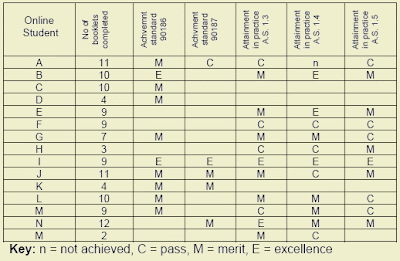
Tables 1 and 2 show the actual achievement standard test results of active students in the eSection group and the mainstream group respectively. In charts 1 and 2, the number of complete booklets returned, and the number of passes in each category (pass, merit or excellence) is represented as “average per student”.

For the eSection group, the number of achievement standard tests that gained at least a pass averaged a value of 3.3 per student. The corresponding student data for the mainstream group showed that the number of achievement standard tests that gained at least a pass averaged a value of 2.8 per student.

One eSection student passed all achievement standard tests with excellence. If the contribution due to this student is ignored, the most significant difference between the groups is the number of achievement standard tests passed with merit and averaged per student. In the eSection group. Almost twice as many students passed standards with merit as achieved straight passes. In the mainstream group, however, the number of passes gained with merit and the number of straight passes were the same.

Tables of raw data on standards achieved 2002:

Table 1 (achievement data for eSection group).
Table of achievement data for eSection students
Table 2 (achievement data for mainstream group).
Table of achievement data for mainstream students
Bar charts - averaged per student (year 11 groups).
Bar charts of student achievement averages - click to enlarge click chart to enlarge.
Case Study - Alycia - 2002:

This case study is of a student I taught in 2001. The name of the student and her grandmother’s name are aliases. All other information relates directly to the student.

Alycia is a delightful, 15 years old, full time student. She lives with her grandmother, Mary, a very caring, supportive caregiver who shares Alycia’s many interests and encourages her to pursue those as well as her school studies.

Alycia does not keep good health. It was partly due to this, and the treatment she was receiving for it, that eventually brought about her referral to TCS by Special Education Support. Evidently her appearance, brought on by the medication she was given, had contributed to her being the victim of severe bullying in her previous school.

Among other subjects she studied was year 10 Science. The eSection
year 10 Science course is made up of two parts:

  1. Paper based resources – 15 standard Correspondence School booklets covering all aspects of the year 10 science curriculum.

  2. Web enhancements that accompany lessons in the paper based resources, permitting student self-assessment, as well as providing direct email feedback between teacher and student.
Alycia was immediately stimulated to learn more about science when she became a student in the eSection. She seemed to really enjoy using the computer for her lessons and saw the potential it had to help her to learn. One of the comments put on the student database by her form teacher was:

“(Alycia) really enjoying science with the e-school. Is doing this to the exclusion of other subjects.”

Her interest in science was obvious. Alycia wrote this in one of her early emails:

“I’ve got to tear myself away to work on my other courses . . . !”

Alycia visits her grandfather regularly. One day she took her science lessons to show her grandfather, for she was able to access her page on her grandfather’s computer. The next day she sent me an email about it:

“. . . He is very interested in Science and so is really pleased that I am too. He thought the activities were really great. . . . . . I really enjoyed the lab and so did my Grandad.”

Alycia had used the computer to bridge a generation gap with a common interest in learning about Science.

I believe that it was the inclusion of the computer and the support that Alycia received from Mary, that prompted her to take up Computer Studies midway through the year. This year and last, Alycia has achieved most of the credits in Computing at level 2 and at level 3 towards a National Certificate.

At the beginning of term 2, Alycia had access to her own web page on TCS web site. Her page held the links to the digital enhancements to her Science lessons. She was quick to provide me with a digital photograph of her new bichon frise puppy to put on her web page. She took a real pride in using the web page in her science learning.

Alycia’s enthusiasm for anything that takes her interest was evident from the start. This was the case with her eagerness to learn about Science, her zeal in using computers, and her joy in making her own music.

Alycia’s interest in music was made apparent to me just after the September 11 terrorist attack in New York. She wrote a song about the attack and its implications for humanity, and sent me a copy of the words in an email. At the same time she apologised for not being able to let me hear her song.

I sent her the site for Pure Voice, one of the recommended free technologies used for sending voice messages by email. When Alycia had downloaded the software, she and Mary immediately sang the song into her computer microphone and sent me a copy of the recording by email. The song was in two-part harmony with a twin guitar accompaniment, sung and played by her and Mary.

It was some weeks later, when Alycia was recovering from a period of illness, that I put a music sound file on her web page, at her request. The music was a simple electronic piece and was selected so that it played as soon as she opened her web page. When Alycia eventually got back to her normal work routine and visited her web page, she brimmed with enthusiasm at what she had heard and sent me an email:

“I've been really snowed under with personal pressures and work so it hasn't been until now that I've been able to really get back into work. I went into my web page today and I heard the music. I think the music is great, it's a really fun beat and it's got a really funky sound. I love it.”

Alycia went on to complete the year 10 Science course, and did very well in her overall achievement in Science. She was well equipped to go on to study her chosen year 11 subjects in 2002.

The events outlined in this case study show the significance of the incidental interactions, as well as the subject specific interactions, between student and teacher in the development of a good working rapport in the distance learning environment. Key to this success is the immediacy of the communication between student and teacher, made possible by the computer.

Alycia’s case is by no means an exception, for it is the close proximity of student and teacher, brought about by using digital technology, which can facilitate student centred learning in a distance learning environment.

( 10 ) ( 9 ) ( 8 ) << - related posts - >> ( 6 ) ( 5 ) ( 4 ) ( 3 ) ( 2 ) ( 1 )

Ka kite anō - Catch ya later